
AI tools for physiotherapists in India: exercise plans, tracking and appointments
Published , Updated , 22 min read
If you run a physiotherapy clinic in India, the most useful AI tools are not the ones that promise to diagnose patients. They are the ones that solve the three jobs that eat your day: building a home exercise plan a patient will actually follow, seeing whether that patient is improving between visits, and keeping your appointment diary full without constant phone calls. For those three jobs, start with Physitrack’s free trial for exercise plans and Google Calendar’s free booking page for appointments. Everything else in this article earns its place only for a specific need, and every price below is a snapshot that you must re-check on the official pricing or help page before paying or promising a patient a deadline.
A plain disclaimer first, because this is health work. This article is general information only, not professional medical advice, and it does not replace your clinical judgement or a patient’s treating doctor. An AI tool can draft a plan, count repetitions or send a reminder, but it cannot examine a patient, and it should never be the reason a red-flag symptom is missed. If a patient reports worsening weakness, numbness, bladder or bowel changes, unexplained weight loss, fever with back pain, or pain after trauma, that is a clinical conversation and, where needed, a referral — not a task for an app. Check official and professional sources, and your own professional body’s guidance, before changing how you assess, document or charge for care.
The short version of the whole article is this: no single tool does all three jobs well for an Indian clinic. Exercise prescription tools such as Physitrack and Embodia are strongest at plans and adherence tracking. Camera-based tracking such as Flestra adds objective movement numbers but costs extra and needs a phone camera set up well. Practice software such as Ray by Practo is strongest at appointments, reminders and payments in India. And the cheapest reliable appointment system of all is still a free Google Calendar booking page, with WhatsApp reminders added through a separate tool because Google Calendar on its own cannot send WhatsApp messages. Pick one tool per job, run the free trial properly, and only then pay.
The short answer, in one table
| Tool | Best for | What is actually free | Where the paywall sits |
|---|---|---|---|
| Physitrack | Home exercise plans and adherence tracking | 14-day free trial with the full exercise library | Paid plan per practitioner after the trial |
| Embodia | Exercise plans plus clinic charting and scheduling | 7-day free trial of the Practice Management plan | Monthly plan per practitioner after the trial |
| Flestra | Camera-based movement and range-of-motion tracking | 3-day free trial | Monthly or yearly physio plan after the trial |
| Kinecta | AI-drafted programmes you review and approve | 14-day free trial, no credit card required | Paid plans in USD after the trial |
| Ray by Practo | Appointments, SMS reminders and payments in India | Free access tier described on its official page | Paid features and plans; old third-party prices must not be trusted |
| Google Calendar | Free appointment booking page | One shareable booking page at no cost | Multiple booking pages, automated email reminders and payments need a paid plan |
| Gemini | Drafting patient handouts and plain-language explanations | Free tier in India with a Google account | Higher limits and advanced features are paid |
Prices and limits change. Re-check the official pricing or help page of any tool before you pay, and never promise a patient a recovery deadline based on a price or a feature you saw in an article — including this one. Where sources disagree below, that disagreement is stated rather than smoothed over.
Physitrack: the standard home exercise platform
Physitrack is the most established tool on this list for the core physio job: prescribing a home exercise programme and knowing whether the patient did it. You build a programme from a library of more than 18,000 video exercises, set repetitions and sets, and send it to the patient’s phone through the free PhysiApp. The patient follows the videos at home, logs each session, and rates pain and difficulty. That adherence and discomfort data reports back to your dashboard, so you can see trends and adjust the programme before the next visit instead of relying on “I think I did them.”
Physitrack has also added AI-first features, including an AI exercise search where you describe the exercise you want and the system finds it, and motion capture that tracks movement through a camera without sensors. Treat those as helpful drafting and tracking aids, not as a replacement for your own exercise selection: you still choose, edit and approve every programme before it reaches a patient, and that review step is exactly what keeps an AI-assisted plan clinically safe.
On cost, Physitrack’s own pricing page lists a Standard monthly plan at $18.99 per practitioner, with a complimentary 2-week trial, and an annual plan at $227.88 per practitioner with a 10 percent discount. Its support page confirms the same 14-day free trial for new users, with access to the full exercise library and engagement tools during the trial. The patient app itself is free for patients. For an Indian clinic, note that this is dollar pricing, so your actual monthly cost in rupees will move with the exchange rate and your bank’s charges. That does not make it bad value — one retained patient who completes a programme is worth more than a month of the subscription — but do the rupee maths before you commit, and use the full 14 days with real patients, not demo data, before paying.
Use Physitrack if your biggest leak is patients going home with a paper sheet they never open. It is the safest first trial in this article because the job it does is narrow, proven and easy to judge: after two weeks, either your patients did more of their programme or they did not.
Embodia: exercise plans inside a full clinic system
Embodia is for clinics that want the exercise library and the practice management in one place, rather than one tool for plans and another for scheduling. Its Practice Management plan covers charting and SOAP note templates, scheduling with waitlists and reminders, billing and invoicing, a home exercise library of more than 4,500 exercise videos plus room to add your own, patient diaries and outcome questionnaires with analytics, messaging, telehealth, and a clinic-branded patient app.
The trial terms are clear and fair. Embodia offers a 7-day free trial of the Practice Management plan with no credit card required, and everything you set up during the trial is saved if you subscribe. Two honest limits matter. First, the AI Charting and AI DocBuilder features are not included in the trial, although free credits are given once you sign up. Second, the AI Charting add-on after its first 10 free hours is charged at a usage-based rate of $0.01 per minute, billed monthly. The Practice Management plan itself is listed at $45 per month per practitioner, while patient and admin accounts are free, and patients keep access to their prescribed programmes even if your subscription ends.
That last point is worth pausing on, because it answers a real worry: if you stop paying, your patients are not suddenly locked out of the exercises you prescribed. For a solo clinic, however, $45 per practitioner per month is noticeably more than Physitrack’s $18.99, so Embodia only earns that gap if you will actually use its charting, scheduling and billing instead of paying for those separately. If you only need exercise plans, start with Physitrack. If you are replacing a diary, a billing register and a paper exercise sheet all at once, Embodia’s trial is the one to run.
Flestra: camera-based tracking from Bengaluru
Flestra is the most India-specific clinical tool here, and the most interesting technically. It is made by Flestra Lab Private Limited, based in Electronic City Phase 1, Bengaluru, Karnataka. Its idea is simple: the patient exercises at home in front of an ordinary phone camera, and Flestra’s AI watches every repetition, measures joint angles and range of motion, scores movement quality, and sends the numbers to your web dashboard automatically. No wearables, no sensors, no markers. Your dashboard shows who is on track, who is falling behind, and why, with pain before and after each exercise, total repetitions, a day-by-day timeline of what was done, partly done or missed, and reports you can download as a PDF or a spreadsheet.
Flestra’s pricing page lists a 3-day free trial with no payment required, a patient monthly plan at ₹399 per month, and a physio monthly plan at ₹999 per month for unlimited patients, with AI patient insights, churn-risk alerts, adherence tracking, range-of-motion and pain analytics, daily progress reports, custom programmes, secure patient chat and paid consultations. The yearly physio plan is listed at ₹10,788 for 12 months, which works out to ₹899 per month. Those are rupee prices from an Indian company, which makes budgeting far simpler than dollar-priced tools, and the patient app is described as free for the patient.
Two cautions before you buy. First, camera tracking is only as good as the camera setup: poor lighting, a phone placed too close, loose clothing hiding a joint, or a patient exercising partly out of frame will all produce numbers that look precise but are not. Test it with five real patients in real homes before trusting its range-of-motion figures for clinical decisions. Second, three days is a short trial, so plan it properly: enrol patients on day one, check the dashboard daily, and decide on day three whether the numbers changed anything you did. Use Flestra if you want objective between-visit numbers and you are willing to coach patients on camera setup. Do not buy it for the novelty of AI measurement alone.
Kinecta: AI drafts the programme, you approve it
Kinecta takes a different approach from Physitrack and Embodia. Instead of you searching a library exercise by exercise, you describe the client and the goal, and its AI drafts a structured home exercise programme. You then review, edit and approve every set, repetition and progression before anything reaches the client, and you can save your best programmes as templates to reuse across your team. Between visits, clients log pain and rehab markers, get daily check-ins, and can ask routine questions to an in-app AI coach that answers from their own programme, so they are less likely to sit stuck waiting for your next slot.
Kinecta also bundles bookings, payments, secure messaging and progress reports built from logged data rather than recall, which makes it useful for reviews and referrer reports. Its trial is generous and low-friction: a 14-day free trial with no credit card required, and you can cancel from the billing portal during the trial without being charged. The company describes its pricing as early founding rates in USD, with the rate you join at being the rate you keep, and it does not pin one single price in the material checked for this article. That is not a red flag on its own — early-stage tools often price this way — but it does mean you must read the current pricing page inside your own trial account before paying, and you must not quote a Kinecta price to a partner or a patient from this article.
Use Kinecta if your bottleneck is the time it takes to write programmes in the evening. The AI draft is the point: if it saves you twenty minutes per new patient and your approval step stays strict, it pays for itself. If you already have templates you reuse happily, a library tool such as Physitrack may be cheaper and simpler.
Ray by Practo: appointments, reminders and payments for Indian clinics
Ray by Practo is the India-first practice management option, and for appointments it is the strongest fit on this list. Its official page describes it as clinic management software used by more than 50,000 doctors, covering over 25 million appointments across 5 countries, with automated appointment SMS messages, easy re-scheduling and cancellations by patients, turn-by-turn directions in smart SMS messages, and online payments collected before the patient reaches the clinic or in one click for dues. It also describes free access to the Unified Health Interface and the ability to upload patients’ health records directly, which connects to India’s ABDM ecosystem.
Here is where sources disagree, and you should know about it honestly. A third-party listing for Ray by Practo showed a premium plan at ₹999 per month billed yearly, with advanced calendar, professional billing, patient charting, unlimited appointment confirmation and reminder SMS messages, and Practo.com integration. But that same listing carried a disclaimer that its pricing details were last updated in August 2020 and may differ from the actual price. Six-year-old third-party pricing must not be used for a budget decision. The official Practo page is the only price source to trust here: check its current plans page before paying, and ask the sales team in writing what is included in the free access tier and what is paid.
Use Ray by Practo if you want Indian patients to find you, book you, get SMS reminders and pay you inside one system they already recognise. It pairs naturally with an exercise tool: Ray runs the diary, Physitrack or Embodia runs the programme. If you already get most patients by referral and your diary is a simple book, Ray may be more system than you need, and the free Google Calendar option below may be enough.
Google Calendar: the free appointment system that actually works
For a solo physiotherapist or a two-room clinic, Google Calendar’s appointment scheduling is the best free starting point, and it is worth describing properly because many clinics pay for scheduling they could get for nothing. You create an appointment schedule, set the appointment duration and your available hours, add custom questions to the booking form, and share one booking page link with patients. Booked appointments appear automatically on your calendar, and you can set buffer time between sessions so a 45-minute appointment never collides with the next patient.
Google’s own Workspace page confirms the free tier: at no cost, you get one shareable booking page with 15 GB of pooled storage across Gmail, Drive and Photos. Multiple booking pages for different services, automated email reminders, email verification to prevent spam bookings, checking across multiple calendars, and Stripe payment collection at booking time sit in the paid Business Standard tier. That split is honest and useful: one booking page is genuinely enough for a clinic offering one standard appointment type, and you only need to pay when you want different pages for assessments, follow-ups and home visits, or automated reminders.
The one gap that trips up Indian clinics is WhatsApp. Google Calendar on its own sends notifications by email and inside its own app; it does not send a patient a WhatsApp message, and adding a patient’s name and number to an event does not create a WhatsApp reminder. Third-party tools exist that read your calendar and send WhatsApp reminders, and some offer a free starting tier, but Meta also charges its own rate on business-initiated WhatsApp messages depending on message type and country. So budget for two costs if you go this route: the reminder tool and Meta’s message charges. If most of your patients read WhatsApp and ignore email, that cost is still usually smaller than one no-show per week — but check the reminder tool’s current pricing and Meta’s rates before promising yourself a saving.
General AI chatbots: useful for drafting, dangerous for patient data
General chatbots such as ChatGPT and Gemini deserve a short, careful section, because almost every physiotherapist will use one whether this article mentions it or not. Gemini’s India subscriptions page lists a free tier at ₹0 per month with a Google account, including its Flash-Lite model, image generation and editing, Deep Research, Gemini Live, Canvas and Gems. ChatGPT likewise offers a free tier, with its own limits that change over time, so check the current limits inside the app before building a workflow around it.
The safe uses are drafting, not deciding. A chatbot can turn your rough notes into a plain-language home exercise handout, rewrite a discharge summary in simpler Hindi or English, suggest phrasing for an appointment reminder, or summarise a public guideline for your own reading. The unsafe uses are the ones that leak or invent. Never paste a patient’s name, phone number, address, photos, scan reports or any identifiable detail into a general chatbot, because that data leaves your control and may be used in ways your consent form never covered. Never copy an AI-generated exercise dosage, diagnosis or prognosis into a patient record without checking it yourself, because chatbots can state wrong doses and wrong precautions with complete confidence. And never let a chatbot’s summary replace reading the original guideline when a decision affects a real patient.
Used that way — drafts in, human review always, no patient data ever — a free chatbot is a genuine time-saver for handouts and admin writing. Used as a clinician, it is a liability. The line between those two uses is the whole skill, and it is yours to hold, not the tool’s.
Using these tools in India: language, data, payments and low bandwidth
India changes which tool wins, and not only because of price. First, language: many patients understand exercises better in Hindi or their regional language than in English, and a video exercise library helps here because the patient can copy a movement without reading a paragraph. If you write handouts with a chatbot, get them checked in the patient’s language by a human before handing them over, because a mistranslated instruction — “bend” versus “do not bend”, for example — is a safety issue, not a typo. For more on language tools, see AI tools for doctors and clinics in India.
Second, data and consent: India’s Digital Personal Data Protection Act, 2023, together with the 2025 Rules, creates a consent-based framework for digital personal data, including health data, with emphasis on explicit, informed and specific consent, data minimisation, and patients’ rights to access, correct and erase their data. In practical clinic terms, that means your consent form should say what data the app collects, why, and who else sees it; you should collect only the data the treatment actually needs; and you should know how a patient can ask for their data to be corrected or deleted. If a tool’s privacy policy cannot answer those questions plainly, that is a reason not to use it, however good its exercise library is. This is general information about the law, not legal advice, and a local professional should be consulted for your clinic’s actual obligations.
Third, connectivity and devices: many patients have Android phones, limited storage and patchy mobile data. A tool whose patient app is free, small and works on an ordinary phone will beat a heavier tool every time, and video exercises should be short enough to load on a slow connection. Ask patients in the trial whether the app actually opened at home, not just in your clinic’s Wi-Fi. Fourth, payments: Indian patients increasingly expect UPI and online payment options, and Ray by Practo’s online payment feature speaks to that, but confirm which payment methods and charges apply on the current plans page before telling patients they can pay online. Finally, discoverability: patients searching for a physio often start on Practo or Google, so a booking page that is easy to share on WhatsApp matters more than a beautiful website nobody finds.
What to avoid
The fastest way to waste money in this category is to buy the most impressive tool first. Avoid paying for camera-based tracking before you have fixed basic adherence, because precise range-of-motion numbers for a patient who never opens the app are worthless. Avoid any tool that asks you to upload identifiable patient records into a general chatbot or an unvetted AI feature; if you cannot explain where that data goes, do not send it. Avoid building your whole diary around a free tier’s limits without reading them — Google Calendar’s free tier allows one booking page, not many, and a second service type means a paid plan or a second workaround. Avoid quoting prices from third-party listings, especially the outdated Ray by Practo figures discussed above, and avoid promising a patient a result by a date because an app suggested it. Avoid letting an AI draft reach a patient without your review, even when you are busy, because the one unreviewed error is the one that causes harm. And avoid collecting more patient data than the treatment needs, simply because the tool offers more fields; every extra field is a privacy obligation you now own.
A related trap is buying two tools that do the same job. Physitrack plus Embodia plus Kinecta is not a system, it is three subscriptions and three apps your patients must learn. Choose one exercise platform, one diary system, and one drafting helper, and let the trial results — adherence rates, no-show rates and minutes saved per patient — decide whether each one stays. For fitness and coaching comparisons that overlap with physio work, see AI tools for fitness in India and AI tools for sports coaches in India.
Frequently asked questions
Which AI tool is best for a solo physiotherapist in India? For most solo clinics, the best starting combination is Physitrack’s 14-day trial for home exercise plans plus a free Google Calendar booking page for appointments. That pair covers the two biggest daily jobs at the lowest cost, and you can judge both within two weeks. Add Ray by Practo if you need Indian SMS reminders, Practo discoverability and online payments in one system, and add Flestra only if camera-based tracking changes a clinical decision for you.
Can AI replace a physiotherapist’s assessment? No. AI tools in this article draft programmes, count repetitions, track adherence and send reminders; none of them examines a patient, takes a history, or rules out red flags. Assessment, diagnosis and progression decisions remain the physiotherapist’s responsibility, and any tool that suggests otherwise should not be used for clinical decisions.
Do these tools work in India without a VPN? Yes, all the tools in this article are web or app services that work in India without a VPN, based on the sources checked for this article. Physitrack, Embodia and Kinecta are international services with dollar pricing, while Flestra and Ray by Practo are India-oriented, with Flestra priced in rupees. If any tool ever asks you to use a VPN to reach it, treat that as a warning sign and check its official help page before continuing.
Is Physitrack free? Physitrack is not free long-term. It offers a 14-day free trial with access to the full exercise library, and its Standard plan is listed at $18.99 per practitioner per month, or $227.88 per practitioner per year. The PhysiApp patient app is free for patients. Re-check the official pricing page before paying, because prices and trial terms change.
How is Flestra different from Physitrack? Physitrack gives patients exercise videos to follow and tracks what they log, including sessions and pain ratings. Flestra goes further by watching the patient through a phone camera and measuring joint angles, range of motion, repetitions and movement quality automatically. That objectivity is valuable, but it depends on good camera setup, and its trial is only 3 days, so test it with real patients in real homes before paying.
Can Google Calendar send WhatsApp appointment reminders? Not on its own. Google Calendar sends email and in-app notifications, but it has no built-in WhatsApp reminder feature. You need a separate third-party tool that reads your calendar and sends WhatsApp reminders, and Meta charges its own rate on business-initiated WhatsApp messages. Check both costs before choosing this route, and confirm the reminder wording and timing with a few patients first.
Is patient data safe in these AI tools? No tool can promise absolute safety, and you should not accept such a promise from any vendor. Check where the data is stored, who can access it, how a patient can correct or delete it, and whether the tool’s policy fits India’s DPDP consent framework. Never paste identifiable patient details into a general chatbot, collect only the data treatment needs, and get professional advice on your clinic’s data obligations rather than relying on a vendor’s marketing page.
Should a small clinic pay for Ray by Practo or use Google Calendar free? Use Google Calendar free if you have one standard appointment type, most patients book through you directly, and email or manual WhatsApp reminders are enough. Pay for Ray by Practo, after checking its current official plans page, if you need Practo discoverability, automated SMS reminders at scale, easy patient re-scheduling and online payments. Do not decide from the old ₹999 per month third-party figure discussed above, because that listing itself warns its pricing was last updated in 2020.
Final verdict
Start with Physitrack’s free trial for exercise plans and Google Calendar’s free booking page; add Flestra only if camera tracking earns its fee. That is the whole recommendation in one sentence: one trial for plans, one free page for the diary, and every further rupee spent only after a trial proves it saves time, reduces no-shows, or improves adherence in your own clinic. Review every AI draft before it reaches a patient, keep patient data to the minimum the treatment needs, and re-check official pricing before paying. Done that way, AI becomes a quiet helper for the week between appointments — which is, after all, where physiotherapy outcomes are actually won or lost.
Image credits:
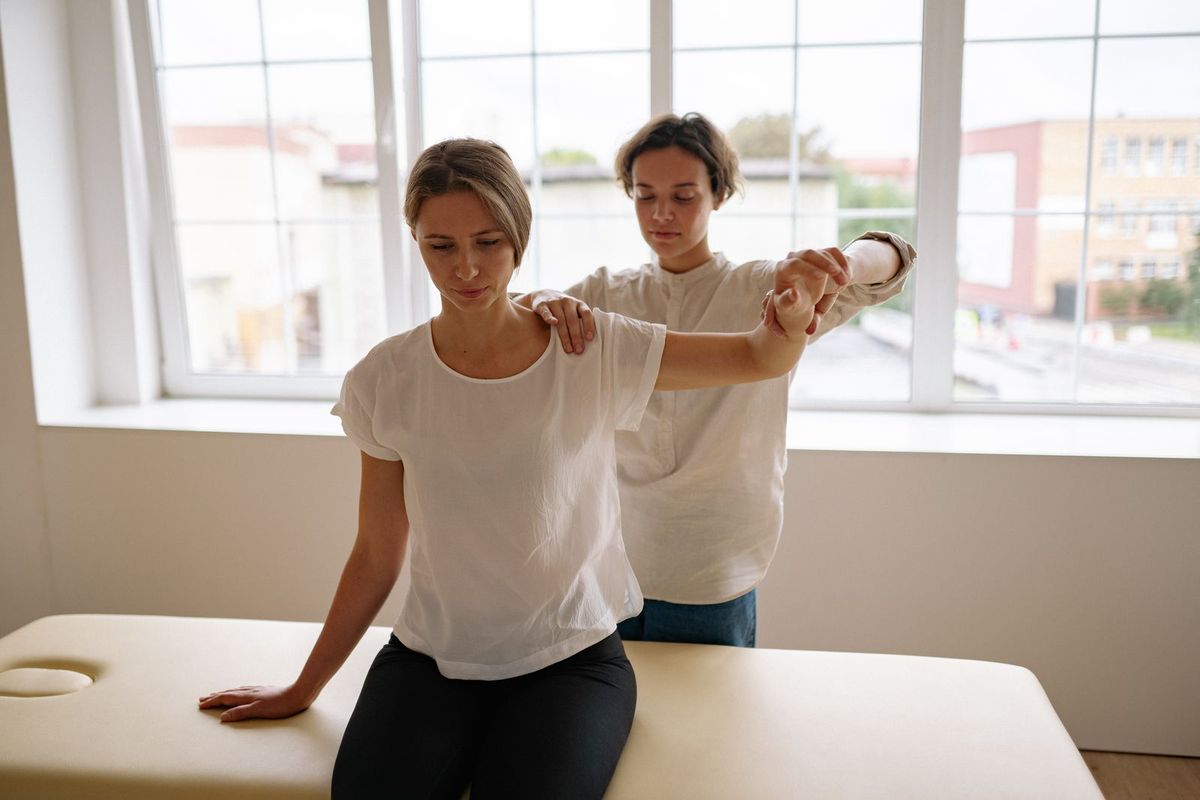
- A therapist assists a woman with arm stretching during a physical therapy session — Pexels — Yan Krukau — Pexels License
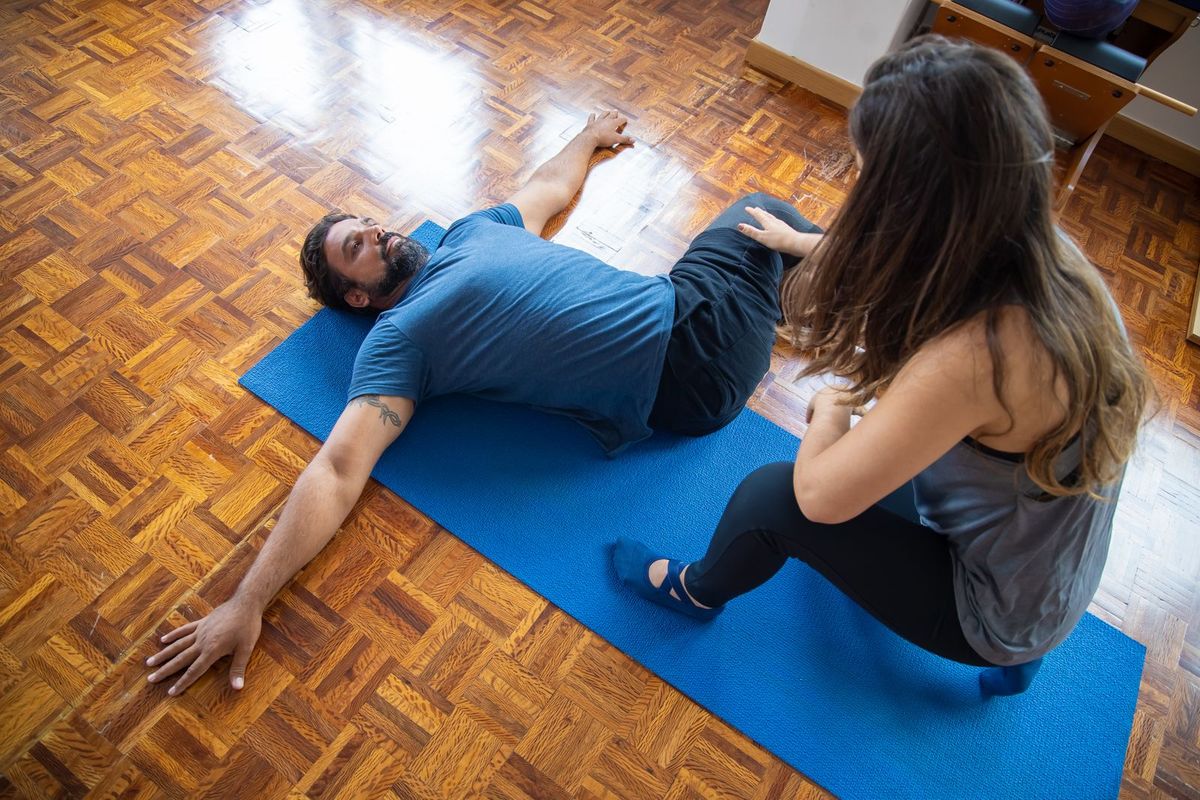
- A man and woman engaged in a rehabilitation exercise on a yoga mat — Pexels — Kampus Production — Pexels License
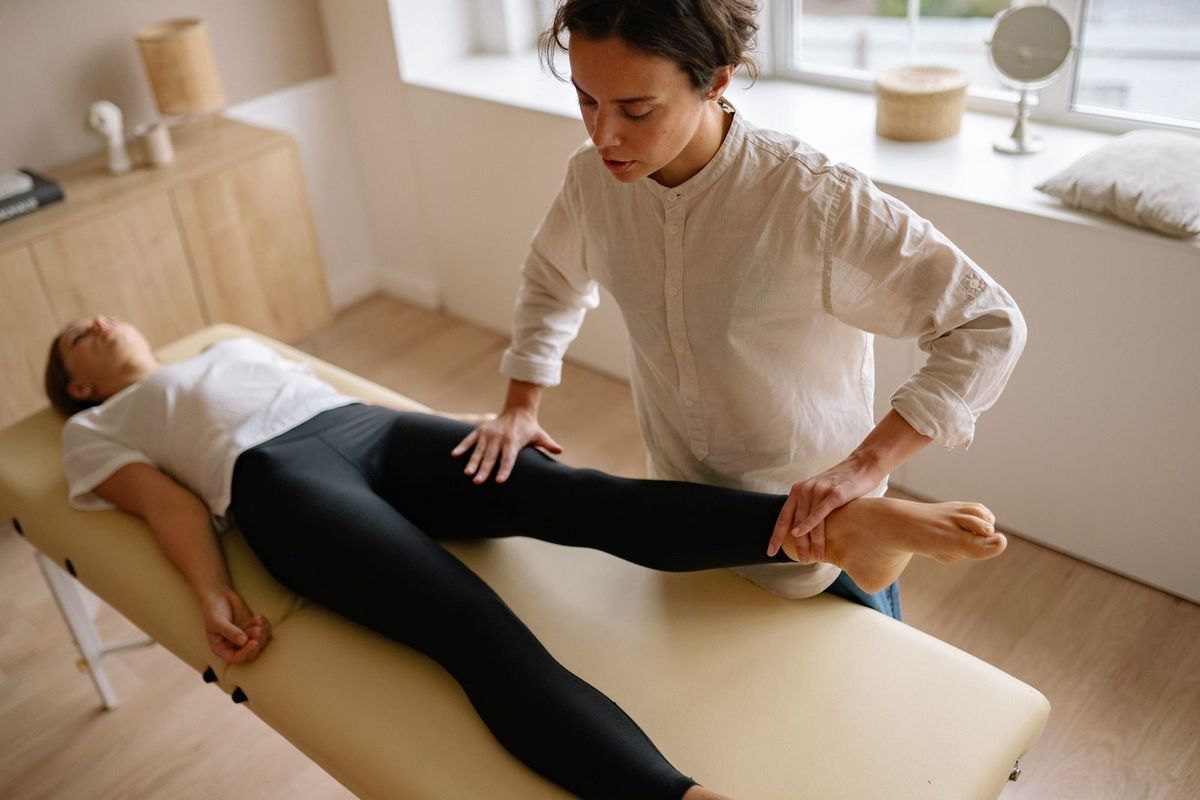
- A physiotherapist assists a woman with leg rehabilitation therapy — Pexels — Yan Krukau — Pexels License