
AI tools for veterinarians in India: bookings, pet records, reminders and teleconsults
Published , Updated , 21 min read
A veterinary clinic in India runs on the same three things every day: the appointment list, the pet’s record, and the reminders that bring the pet back on time. A missed vaccination reminder means a lapsed vaccine. A lost paper record means the next vet starts from zero. A phone that rings all morning means the vet is answering booking calls instead of examining animals. AI and clinic software can take a real share of that load, but the tool that books appointments is not the tool that writes your notes, and neither one replaces an in-person examination, a blood test, or a vet’s own judgement.
The direct answer for an Indian vet clinic is this: use an India-built veterinary practice management system such as Koko or TouchVet as your single home for appointments, pet records, prescriptions, billing, and reminders, because both are built for Indian clinics with GST billing and WhatsApp reminders rather than adapted from a foreign system. Use the free WhatsApp Business app, or your practice system’s built-in WhatsApp reminders, for vaccination, deworming, and follow-up reminders, because that is where Indian pet parents actually read messages. Use an AI scribe such as Scribenote only to draft SOAP notes from the consultation, and read and correct every note before it enters the record. Use teleconsult services such as Supertails or a home-visit service such as Vetic as a referral or follow-up channel for pet parents, not as a substitute for examining an animal that is seriously ill, injured, or in pain. Use a general chatbot such as ChatGPT or Gemini only for anonymised drafts, such as vaccination handouts, post-surgery care sheets, and appointment messages, and never paste a pet parent’s name, phone number, or identifiable case details into one.
This article is written for India on purpose: solo vets, two-vet clinics, and small animal hospitals, pet parents who message in Hindi, Hinglish, Tamil, Telugu, Marathi, or English, a normal phone and laptop, and no assumption that you have a hospital IT team or a large monthly budget. It covers dogs and cats mainly, because that is where most Indian small-animal clinics work, with notes on where the same tools help for other pets. It also carries a warning that matters for vets more than for almost any other group in this series: an AI tool cannot feel a lump, hear a heart murmur, or see how an animal moves. If a pet parent describes vomiting, collapse, breathing difficulty, a wound, or sudden pain, the answer is an in-person visit, urgently, not a chatbot reply.
Disclaimer: This article is general information only, not veterinary, legal, or professional advice. It does not replace a veterinarian’s clinical judgement, professional obligations, or the advice of a qualified professional. Before adopting any tool for animal care, check official sources, your professional body’s current guidance, and the tool’s own privacy, security, and pricing pages.
The short answer, in one table
| Tool | Best for | Free limit or price to watch |
|---|---|---|
| Koko | Appointments, pet records, GST billing, WhatsApp reminders, pet-parent app | Free demo, then a 14-day free trial with no card needed; paid pricing confirmed on demo, not published as a single public price |
| TouchVet | Complete clinic system: appointments, SOAP notes, lab, inventory, GST invoicing, unlimited WhatsApp | India plan listed at ₹14,999 per year, all features included; AI assistant free in year one |
| WhatsApp Business app + Google Calendar | Free reminders, confirmations, and booking for a solo vet starting out | WhatsApp Business app is free; Google Calendar is free; reminder discipline is manual unless a practice system automates it |
| Scribenote | AI scribe that turns consultation speech into SOAP notes | Free tier listed at $0 with unlimited notes on standard AI models; check data terms before use |
| Supertails teleconsult | Online vet consultation for pet parents, follow-ups and advice | Book online or in-app, vet calls within about 10 minutes of the slot; check current consultation fee before promising a price |
| Vetic home visit | Home vet visits, including vaccination, for pet parents who cannot travel | Home consultation listed at ₹399, shown against ₹799, at the time of checking |
| ChatGPT / Gemini | Anonymised drafts: care sheets, handouts, message templates | Free tiers exist, but they are not clinical systems; never enter identifiable pet-parent data |
Prices and limits change, and the figures above are snapshots from sources checked while writing this article. Always re-check the official pricing and help page before paying, promising a pet parent a deadline, or budgeting for a year. Where sources disagree or a price is not publicly listed, this article says so rather than guessing.
Koko: the India-built clinic system for appointments, records, and reminders
Koko is a cloud-based veterinary practice management software built for Indian clinics and hospitals, and its pitch is connection: appointments, medical records, prescriptions, billing, inventory, WhatsApp reminders, lab reports, pet-parent communication, and product refills in one system, so the clinic stops re-entering the same information in three places. Its own site reports more than 2.5 lakh pet visits facilitated on the platform, more than 50,000 pet profiles managed, and more than 5 lakh WhatsApp reminders sent, which at least shows it is being used at real scale in India rather than being a demo product.
The features that matter most for a daily clinic are concrete. The appointment view shows the whole team’s day, including walk-ins. Medical records carry SOAP notes and vaccination charts, with a complete history searchable in seconds. Prescriptions flow into billing and refills. Billing is GST-ready and linked to inventory batches and expiry, with low-stock alerts and reorder suggestions. WhatsApp reminders go out automatically for vaccines, deworming, and follow-ups, which is the feature that most directly recovers lapsed patients and missed revenue. A pet-parent app puts records, bookings, and reminders in the owner’s pocket.
Koko offers a free demo, a roughly 30-minute walkthrough on sample data, followed by a 14-day free trial with no card needed, and it says setup and data migration are included if you go ahead. Paid pricing is not published as one simple public price on the pages checked, so treat the demo as the pricing conversation: ask for the monthly or annual fee in writing, what counts as an extra charge, how many staff seats are included, and how you export your pet records, appointments, and bills if you ever leave. A clinic’s records are its memory, and a tool that makes export hard is a long-term cost even if the monthly fee looks low.
Koko is best for a clinic that wants one Indian system for the whole day, from front desk to billing to reminders. It is less obviously the right pick if you only want one narrow job done, such as drafting notes, in which case a scribe tool below may be cheaper and faster to adopt.
TouchVet: one plan with unlimited WhatsApp and a built-in AI assistant
TouchVet is a second India-focused veterinary practice management system, and the comparison with Koko is useful because the two products overlap heavily. TouchVet covers appointments, SOAP notes, prescriptions, lab, indoor patient management, expense tracking, accounting and ledger, GST invoicing, vendor management, a pet-owner portal, real-time clinic chat, unlimited WhatsApp reminders, push notifications, and an AI assistant, all in one place.
Its pricing is unusually transparent for this category. Its pricing page lists a single India plan, TouchVet Pro, at ₹14,999 per year with all features included, including unlimited WhatsApp notifications for vaccine reminders, appointment alerts, deworming due dates, and follow-ups, and unlimited push notifications. Its AI assistant, which answers questions about patient records, pending vaccinations, stock, and invoices, is included free in year one. That unlimited-WhatsApp point deserves attention: in a system where reminders are charged per message, a busy clinic can quietly spend more on messages than on the software itself, so an unlimited allowance removes a budgeting worry, provided the terms stay the same at renewal.
The accounting side is also stronger than a bare appointment book. TouchVet includes an owner ledger with a full financial history per pet owner, an expense tracker, a full accounting module with income against expenses and a GST tax breakdown, and PDF and Excel export. For a clinic that currently tracks money in a separate register or spreadsheet, that consolidation saves real reconciliation time at month end.
TouchVet is best for a clinic that wants one predictable annual price and does not want to count reminder messages. Before committing, run the same checks as for Koko: a trial on your own clinic’s day, not a demo script, confirmation of what happens to the price in year two when the AI assistant’s free year ends, and a written answer on data export. If your clinic is very small and your main pain is only reminders, the free WhatsApp and calendar route below may be enough for now, and you can move to TouchVet when the manual work starts costing you appointments.
WhatsApp Business and Google Calendar: the free starting point for a solo vet
Not every vet needs paid software on day one, and the honest starting point for a solo practice is the combination Indian pet parents already use: WhatsApp and a calendar. The WhatsApp Business app is free and lets a clinic set a business profile, greeting and away messages, quick replies for common questions such as clinic hours and vaccination schedules, and labels to sort chats by, for example, vaccination due or post-surgery follow-up. Google Calendar is free and gives a shareable booking view, reminders, and a record of who came when.
The workflow is simple and it works. A pet parent messages on WhatsApp, the vet or receptionist confirms a slot, the appointment goes on the calendar with the pet’s name and the reason for the visit, and a reminder goes out the day before and again on the morning of the visit. Vaccination and deworming dates go on the calendar as recurring events, so the next due date is visible the moment the pet’s record is opened. For a clinic seeing a handful of patients a day, this is often enough, and it costs nothing.
Its limits are equally clear, and they are the reason clinics graduate to Koko or TouchVet. Reminders are manual, so a busy day means forgotten reminders. There is no proper pet medical record, only chat history and calendar notes, so finding a two-year-old vaccination history means scrolling. There is no GST billing, no inventory tracking, and no lab-report attachment in a structured record. There is also a privacy habit to build from the start: keep clinical photos and case details out of casual group chats, and do not forward a pet’s record to anyone except the owner without a good reason. When missed reminders start costing you repeat visits, or when finding an old record takes longer than the consultation, that is the signal to move to a practice system rather than adding more spreadsheets.
Scribenote: an AI scribe for veterinary notes, used with care
Scribenote is an AI scribe designed specifically for veterinarians, and its promise is the one every vet recognises: less typing after the patient leaves. You record the consultation, appointment, or phone call from a phone, tablet, or laptop, Scribenote converts the speech into clear structured notes in SOAP and other formats, and you edit and export the note into your clinic’s practice management system. Its own site claims a vet can save one to two hours on day one and more than ten hours in the first week, figures that should be treated as marketing claims to test, not as guarantees.
Its free tier is genuinely usable for a trial: listed at $0, it includes unlimited note usage on standard AI models, standard transcription quality, self-serve support, unlimited care team members in Teams Mode, and practice-system integration. That makes it cheap to test properly. Run it through a real clinic week, in your own accent and your clients’ language mix, and score it on the questions that matter: how many corrections per note, how often drug names, doses, and weights are wrong, and how long you actually spend reviewing. A scribe that is fast but wrong on a dose is worse than no scribe at all, because you still have to check every line and now also have to stay alert for confident errors.
The privacy questions matter as much as the accuracy ones, and they deserve a direct written answer from the vendor before any client data flows through the tool: where is consultation audio processed, is it stored, for how long, is it used to train models, and can you delete a session completely? A good answer is specific and written down. A vague answer is a reason to walk away. Also confirm consent practice: tell the pet parent you are recording for notes, and do not record a consultation where the owner is uncomfortable with it. Scribenote is best for a busy vet whose bottleneck is documentation time. It is not a diagnosis tool, and it should never be treated as one. Read every note, correct it, and sign it yourself, because the note is yours the moment your name goes on it.
Teleconsult and home visits: Supertails and Vetic as follow-up channels
Teleconsultation in veterinary care has a narrower honest role than in human medicine, because so much of a vet’s examination is hands-on. It is genuinely useful for follow-ups, behaviour questions, diet advice, reviewing a lab report, checking a healing wound by photo or video, and deciding whether a pet needs to come in urgently or can wait for a routine slot. It is not a substitute for examining an animal that is collapsed, struggling to breathe, bleeding, in visible pain, or suddenly unable to walk, and any service that suggests otherwise should not be trusted.
Supertails runs an online vet consultation service in India, bookable on its website or app, where the vet calls within about ten minutes of the scheduled consultation time, and it reports more than 50,000 pets treated, more than 25,000 pharmacy orders, and an average rating of 4.96. Its vets listed on the page include specialists in gynaecology and obstetrics, general medicine, and parasitology, with MVSc and PhD qualifications. For a clinic, Supertails is best understood as a channel pet parents already use, and as a model for what your own follow-up service should offer: easy booking, a call at the promised time, and a clear next step, whether that is home care, a medicine order, or an in-person visit.
Vetic takes the other route: instead of bringing the pet to a screen, it brings the vet to the home. Its home consultation visit is listed at ₹399, shown against ₹799, with a 30-minute arrival window in its service areas, a rating of 4.9, and more than two lakh happy pet parents claimed on its page. A home visit covers a pre-vaccine health check, vaccine administration, a digital consultation record, and post-vaccine monitoring. For a clinic, the lesson is practical: home vaccination visits are a service pet parents will pay for, especially for anxious cats, large dogs, and elderly owners, and a clinic can offer them itself with a simple booking flow rather than losing those clients to a platform.
If your own clinic offers teleconsult follow-ups, set the rules in writing before the first call: which cases are suitable, how long a call lasts, what it costs, what happens if the vet decides the pet must come in, and how the call note enters the pet’s record. A teleconsult that is never written into the record is a gap in the pet’s history, and a gap in the history is a clinical risk the next time that pet is seen.
Using these tools in India: language, payments, and the front desk
India changes how these tools should be set up, and the setup details are where clinics usually lose the benefit. Language comes first. Pet parents message in Hindi, Hinglish, Tamil, Telugu, Marathi, Bengali, and English, often switching mid-conversation, so reminder templates should be written in the languages your clients actually use, not only in English. A reminder a pet parent cannot read is not a reminder. Test every template on a real phone before it goes to clients, and keep the clinic’s name, the pet’s name, the due vaccine or procedure, and the booking link or phone number in every message, so the parent can act without replying to ask what the message means.
Payments and billing come second. GST-ready invoicing is not a luxury for a clinic that sells medicines, food, and procedures alongside consultations, because it keeps the medicine sale, the batch, the expiry, and the invoice in one place. Before choosing a system, confirm that it handles your actual billing mix: consultation fees, procedures, lab tests, medicine sales, and packages such as annual vaccination plans. Confirm too whether the system supports the payment modes your clients use, including UPI, and what the payment provider charges per transaction, because a per-transaction percentage on a high-volume vaccination camp adds up.
The front desk comes third, and it is the part most clinics underestimate. A practice system only helps if every appointment, walk-in, and phone booking enters it the same day. Decide who owns the calendar, what happens when a pet parent walks in without a booking, and how a cancelled slot is offered to the next waiting client. The cheapest reminder system in the world cannot help a clinic whose book is kept in three places at once. Spend one week running the new system alongside the old register, compare the two at day end, and only then retire the register.
For related clinic workflows, see the companion guides on AI tools for doctors and small clinics in India, AI tools for pet care in India, and AI tools for small businesses in India, which cover the booking, record, and customer-message patterns that vet clinics share with other small practices. Internal links here point only to guides confirmed to exist in this site’s blog folders.
What to avoid
Avoid pasting a pet parent’s name, phone number, address, or identifiable case details into a public chatbot, even to draft a message. Once that data leaves your control, you cannot take it back, and a pet parent who trusted you with their pet’s history did not agree to share it with a chatbot provider. Anonymise first: remove names, numbers, and identifying details, and draft from the clinical facts alone.
Avoid letting any AI tool make, or appear to make, a diagnosis on its own. A chatbot answer, a scribe note, or a teleconsult summary is a draft until a qualified vet has read it, corrected it, and owned it. If an AI output and your examination disagree, your examination wins, and the record should say so. Avoid promising a pet parent a diagnosis, a recovery date, or a treatment outcome based on an AI-generated message, because a promise made by a template is still a promise made by the clinic.
Avoid choosing a system you cannot leave. Before paying, ask for data export in writing: pets, owners, appointments, prescriptions, lab reports, and bills, in a usable file, not a locked report. Avoid a system whose price you cannot find, whose renewal price is unstated, or whose reminder charges are buried in credit pools you cannot forecast. Avoid recording consultations without telling the pet parent, and avoid keeping clinical photos in personal phone galleries or casual chat groups where they can be forwarded by accident.
Avoid the cheapest trap of all: buying software nobody on the team uses. A system the receptionist bypasses and the vet ignores is worse than a paper register everyone trusts, because it creates two competing records and neither one is complete. Pick the system the team will actually open every morning, train everyone on it, and review after a month whether reminders went out, records were completed, and no-shows fell. If the answer is no, the problem is usually the workflow, not the software, and changing vendors without fixing the workflow will repeat the failure.
FAQ
Which single tool should a small vet clinic in India start with? Start with an India-built practice system such as Koko or TouchVet if you want bookings, records, billing, and reminders in one place, or start with WhatsApp Business and Google Calendar if your clinic is solo and your patient numbers are small. The practice system is the better long-term home, and the free route is the better way to learn which reminders and templates your clients actually respond to before you pay.
Do Koko and TouchVet work for Indian clinics without a VPN? Yes, both are built for Indian clinics, work in India without a VPN, and include GST billing and WhatsApp reminders designed for Indian pet parents. You still need a normal internet connection, and you should confirm current pricing and terms on their official pages before paying, because prices and limits change.
How much does TouchVet cost in India? TouchVet’s India plan is listed at ₹14,999 per year with all features included, including unlimited WhatsApp notifications, and its AI assistant is free in year one. Re-check the official pricing page before paying, because the year-two price for the AI assistant and any renewal change should be confirmed in writing.
Is Koko free? Koko offers a free demo and a 14-day free trial with no card needed, but it is not a permanently free product on the pages checked. Use the demo to get the paid fee in writing, including staff seats, reminder terms, and data export, before committing.
Can an AI scribe replace writing notes by hand? It can draft notes much faster, but it cannot replace the vet’s review. Read every generated note, correct drug names, doses, and weights, and sign it yourself. A scribe that saves typing time but introduces an uncorrected error has cost you more than it saved.
Can a teleconsult replace taking a sick pet to the clinic? No. Teleconsultation suits follow-ups, behaviour and diet questions, report reviews, and deciding whether a pet needs an urgent visit. A pet that has collapsed, is struggling to breathe, is bleeding, is in visible pain, or suddenly cannot walk needs an in-person examination urgently, and no video call replaces that.
Should a vet clinic use ChatGPT or Gemini for pet cases? Only for anonymised drafts, such as care sheets, vaccination handouts, and message templates, with all names, numbers, and identifying details removed first. Never paste an identifiable pet parent’s details or a full case history into a public chatbot, and never let a chatbot answer stand as the clinic’s advice without a vet reading and owning it.
What should a clinic check before paying for any of these tools? Check the current price and renewal price on the official pricing page, what is included and what is charged extra, how reminders are counted or limited, how your data can be exported, where consultation audio or records are stored and for how long, and whether the tool works in the languages your clients use. If any answer is vague, ask for it in writing before paying.
How do WhatsApp reminders reduce missed vaccinations? They reach pet parents where they already read messages, carry the pet’s name, the due vaccine, and a way to book, and arrive before the due date rather than after it. The reminder only works if the due date in the system is correct, so enter vaccination dates accurately at the time of the visit, not from memory later.
Is my clinic’s pet data safe in a cloud practice system? It is safer than a paper register only if the vendor protects it properly, so ask where data is stored, who can access it, how backups work, and how a record can be fully deleted on request. Keep clinical photos and records inside the practice system, not in personal galleries or casual chats, and give staff access only to what their job needs.
Final verdict
Start with Koko or TouchVet for bookings and records, WhatsApp for reminders, and teleconsults only for follow-ups — never instead of examination.
Image credits:
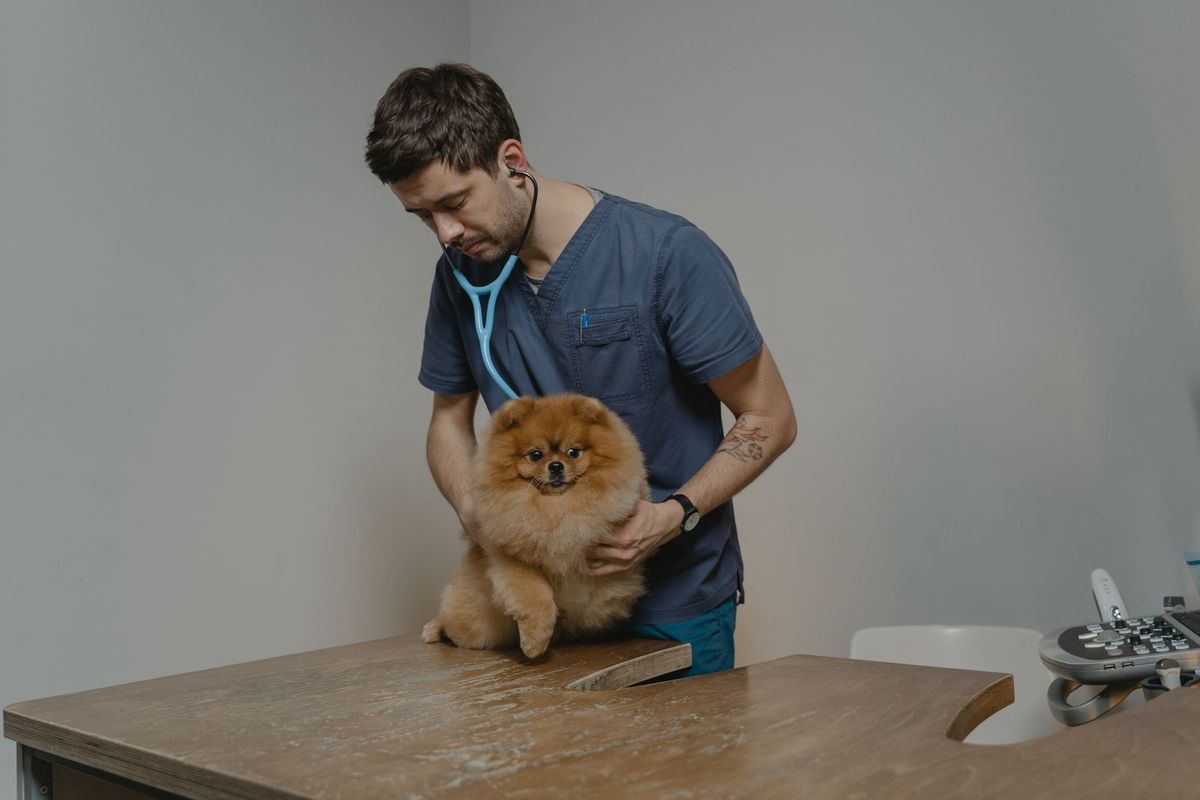
- A veterinarian checks a Pomeranian dog using a stethoscope in a clinic — Pexels — Tima Miroshnichenko — Pexels License
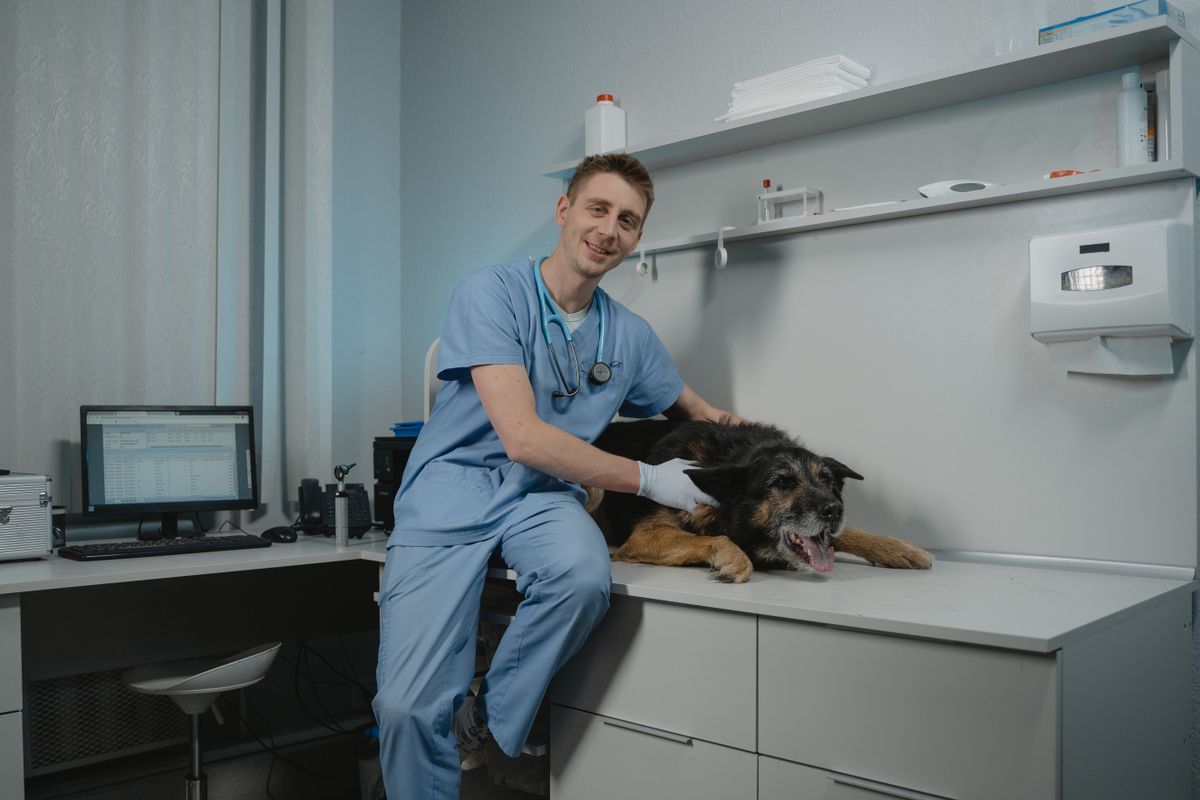
- A veterinarian sits beside a black dog in a modern clinic examination room — Pexels — Tima Miroshnichenko — Pexels License
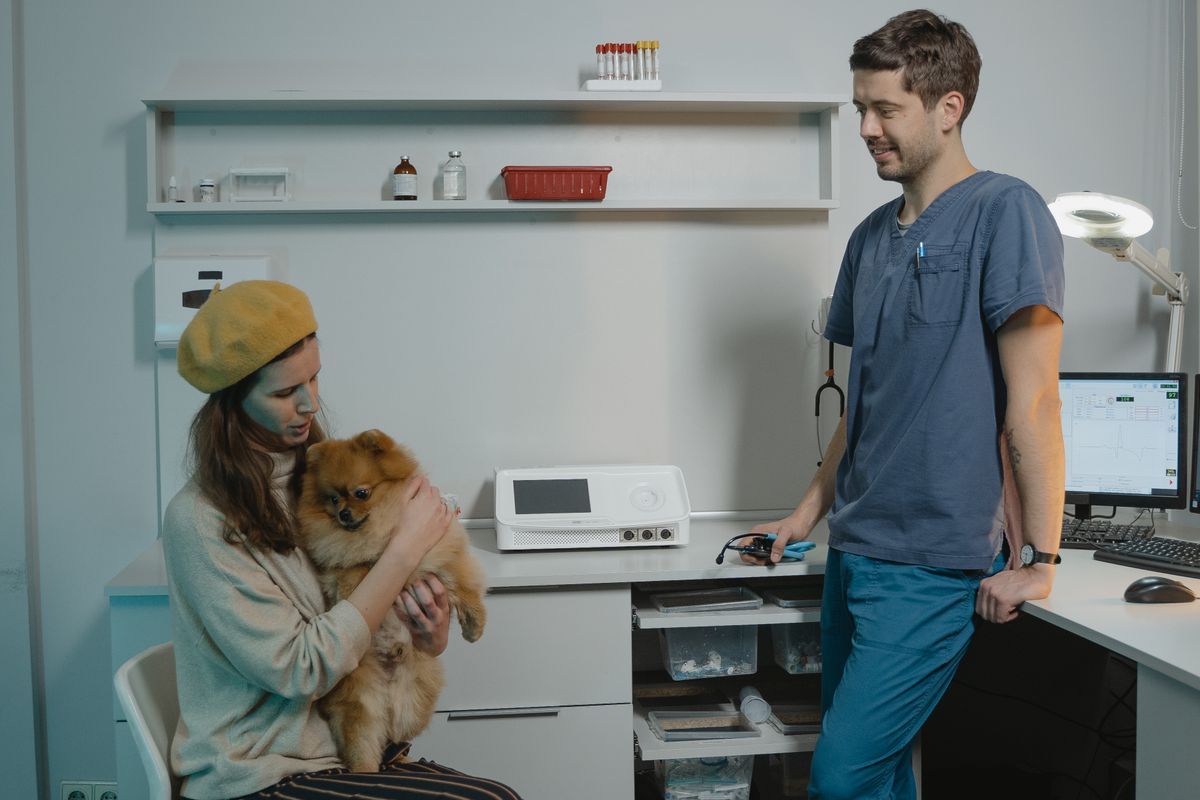
- A veterinarian consults a pet owner holding her Pomeranian dog in a clinic — Pexels — Tima Miroshnichenko — Pexels License