
Best AI Tools for Salons and Beauty Businesses in India (2026)
Published , Updated , 24 min read
The direct answer
If you run a salon, parlour, spa, barbershop or beauty studio in India, the most useful AI tools are not the flashiest ones. They are the ones that fill chairs, cut no-shows, remember your customers, and help a hesitant customer say yes to a hair colour or facial before they sit in the chair. For most small Indian salons, that means three jobs: online booking that works on a phone, customer management that remembers visits and preferences, and a visual try-on that reduces the fear of a wrong cut or colour.
Start with one booking and customer system, not five separate apps. Add a try-on tool only when colour, makeup or hairstyle consultations are a regular source of lost sales. Add a design tool for festival offers and Instagram posts only after booking is steady. This order matters because a beautiful Instagram post that leads to a phone number nobody answers will not fill a chair, while a simple booking link shared on WhatsApp and Instagram can.
For a single-chair studio or a small parlour, Salonify and Fresha are the most practical starting points in this guide. Salonify is built in India and bundles AI help for business questions, upselling and hairstyle previews. Fresha is a widely used global booking platform with a booking link, marketplace discovery and automated reminders. For a larger chain, Zenoti is the enterprise option, but its pricing is not a simple self-serve monthly plan. For try-on, YouCam Makeup is the easiest customer-facing option for hair colour and makeup previews. For posters and social posts, Canva remains the simplest free starting point.
A warning that applies to every tool below: prices, free limits and feature lists change. The figures in this article come from official pricing and product pages checked for this guide, but you must re-check the official pricing and help page before you pay, announce a price to customers, or promise a deadline for a booking feature. Where third-party comparison pages disagreed with an official page, this article follows the official page and says so.
Short-answer table
| Your main need | Best starting pick | Free or low-cost route | Watch out for |
|---|---|---|---|
| Booking plus Indian billing and staff handling | Salonify | Check the current trial and plan on the official site before paying | AI features vary by plan, so confirm which AI tool is included |
| Booking link plus marketplace discovery | Fresha | Free booking links for Facebook and Instagram; paid plans from $19.95 per month for a solo business | A 20% one-time commission applies to brand-new marketplace clients, with a $6 minimum |
| Booking plus payments for a small team abroad or in India | GlossGenius | Standard plan from $24 per month when billed annually | Prices are in US dollars, not rupees, and payment rates apply on top |
| Large chain, many branches, deep analytics | Zenoti | Demo-based enterprise pricing, not a simple free plan | Do not budget from a blog estimate; ask for a written quote |
| Simple calendar, clients and marketing | Booksy | All-features plan at $29.99 per month plus tax, with extra users at $20 per month each | Marketplace Boost charges a one-time fee on a Boost client’s first visit |
| Low-cost booking with unlimited staff | Salonist | Free marketplace listing with 50 appointments per month; Essential from USD 10 per month | Free plan limits appointments, so a busy salon will outgrow it fast |
| Salon and spa billing with tax settings | MioSalon | Free trial with no credit card required | SMS packs are bought separately inside the app |
| Hair colour and makeup try-on | YouCam Makeup | Free app try-on for customers; business try-on is sold through sales contact | A phone preview is not a guarantee of the final colour result |
| Festival posters and social posts | Canva | Free plan includes a number of AI poster credits; Pro unlocks more | Free AI credits are limited, so do not promise unlimited designs |
How to choose in ten minutes
Ask four questions before you pay for anything. First, where do your customers already message you? In India, that is usually WhatsApp, Instagram, or a phone call, so a tool that only works by email will feel slow. Second, who will manage it on a busy Saturday? If only you can use it, it will fail when you are cutting hair. Pick a tool your receptionist or senior stylist can also run. Third, what is your no-show rate? If empty chairs are your biggest loss, automated reminders and advance payment or deposit options matter more than a fancy AI report. Fourth, do you need GST invoices, staff commissions, memberships and inventory, or just a calendar? A calendar app is cheaper, but it will not solve billing and stock problems.
Test one tool with real customers for two weeks. Put the booking link in your WhatsApp business profile, Instagram bio and Google profile. Count three numbers: bookings completed online, no-shows, and repeat bookings within 30 days. If online bookings do not rise, the problem may be that customers never saw the link, not that the tool is bad. Fix visibility before you switch tools.
1. Salonify — best India-built all-rounder
Salonify describes itself as salon and spa management software built in India, used by more than 3,000 salons, spas and wellness businesses. It brings appointments, billing, staff handling, inventory, memberships, loyalty, reports and online booking into one system. That single-system idea is its main strength for an Indian salon that currently juggles a diary, a billing notebook and WhatsApp chats.
Its AI layer has three named tools. SIA, the Salonify Intelligence Assistant, is a voice-powered assistant with regional language support that answers questions from your own salon data, such as today’s bookings, this month’s revenue, low-stock items or staff performance, and can draft a festival campaign or suggest combo packs. SUHA, the Smart Upsell and Hyper-Personalized Advisor, studies a client’s visit history and suggests a suitable add-on service, product or membership at checkout. AI Hair Styles previews hairstyles and colours on a client’s own photo, which directly helps the try-on problem in this guide.
Salonify also offers BookingZone, an online booking flow with instant confirmation, reminders and rescheduling, so customers can book without a phone call. For an Indian business, the practical checks are GST-ready billing, staff commissions, membership handling and whether reminders go over channels your customers actually read. Salonify’s own site is the place to confirm the current plan, trial terms and which AI features sit in which plan, because AI branding alone does not mean every plan includes every AI tool.
Best for: a single salon or small chain in India that wants booking, billing, staff and AI help in one Indian system. Weakness: as with every all-in-one platform, you should confirm the price and AI inclusions in writing before you move your full customer list across.
Official site: https://www.salonify.in/
2. Fresha — best booking link and marketplace reach
Fresha is a salon software and booking system used by independent stylists and teams. Its core pitch is simple: a booking link you can share anywhere, a client booking app, free Facebook and Instagram bookings, automated email and app notifications, and a marketplace that can bring new clients to you.
Pricing on its official pricing page is in US dollars. The Independent plan costs $19.95 per month for a one-person business, with a single calendar column, 100 free messages and 50 free marketing emails. The Team plan costs $14.95 per bookable team member per month, with multiple calendar columns and phone, chat and email support. Both plans list a 7-day trial. Online payments carry transaction fees, for example 2.79% plus $0.20 per online transaction on the published page, and text and WhatsApp notifications beyond the free allowance cost extra per message.
The cost that surprises many owners is marketplace commission. Fresha states that new clients discovered through its marketplace carry a 20% one-time commission, with a $6 minimum fee, while returning clients carry no marketplace fee. That can still be worthwhile if an otherwise empty chair gets filled, but it is not free new business. It is paid discovery, and you should count it in your margin before you turn marketplace discovery on for high-value services.
Best for: a solo stylist, freelancer or small team that wants a clean booking link, automated reminders and extra discovery without building a website. Weakness: dollar pricing, per-message costs after the free allowance, and marketplace commission need careful budgeting in rupees.
Official site: https://www.fresha.com/pricing
3. GlossGenius — best polished booking and payments setup
GlossGenius is a beauty and wellness business platform with a custom booking website, unlimited client notifications, email and text marketing, inventory and retail management, and packages and memberships. Higher plans add forms and waivers, Google booking and reviews, an automated waitlist, time tracking, and room and resource management.
Its official pricing page lists a Standard plan at $24 per month when billed annually, or $28 month to month, and a Gold plan at $48 per month when billed annually, or $56 month to month, with a Platinum plan above that for larger teams. Online invoicing is listed at 2.9% plus $0.30. No credit card is required to start, according to the pricing page, but payment processing fees still apply when you take money.
GlossGenius is polished and well suited to a stylist who wants a professional booking site and card payments without hiring a developer. For an Indian salon, the honest limits are currency and payments: prices are in dollars, and you must check whether its payment setup, payout timing and tax handling fit Indian bank accounts and GST invoicing before you promise it to your accountant. A beautiful booking site does not replace a GST-ready bill.
Best for: a beauty professional who values a clean booking website, card payments and marketing in one place. Weakness: dollar pricing and the need to verify Indian payment and tax fit before committing.
Official site: https://glossgenius.com/pricing
4. Zenoti — best for large chains and enterprise AI
Zenoti is an enterprise salon, spa and medspa platform built for businesses with many locations, staff, services and data. Its official product pages list appointment booking, employee management, payroll and commissions, staff performance and goals, inventory, point of sale, memberships and packages, gift cards, loyalty, online booking, social booking, Reserve with Google, marketing automation and reputation management.
Its newer pitch is a set of AI agents, called an AI workforce, including an AI Digital Marketer for listings and review responses, an AI Lead Manager for lead follow-up, an AI Receptionist voice agent that answers calls and books appointments, an AI Concierge for engagement and rebooking, an AI Dispute Manager for chargebacks, and an AI Business Advisor for key performance numbers across locations. For a large chain, that combination of multi-branch control and AI follow-up is the real selling point, not any single booking screen.
Pricing is the honest limit. Zenoti’s official pricing page presents its system by business type and workflow rather than a single self-serve monthly price, and third-party comparison pages publish widely different rupee estimates. This article does not repeat a blog estimate as a price. If you run a chain, ask Zenoti for a demo and a written quote that covers branches, staff count, payment processing, messaging costs and AI agent inclusions. If you run a single small parlour, Zenoti is almost certainly more system than you need, and a simpler tool will be faster to learn.
Best for: a multi-branch salon, spa or medspa chain that needs payroll, deep reports and AI follow-up across locations. Weakness: enterprise pricing and setup effort; not a quick free trial for a solo studio.
Official site: https://www.zenoti.com/pricing-zenoti
5. Booksy — best simple all-features booking app
Booksy is a booking platform for beauty businesses with 24/7 online booking, built-in marketing tools, client and calendar management, integrated payments, and detailed stats and reports. Its appeal is simplicity: one plan, all features included, no hidden fees in its headline claim, no commitment, and cancellation at any time.
Its official pricing page lists $29.99 per month plus tax for the all-features plan, with extra users at $20 per month each. Payment processing is listed separately, for example 2.49% plus $0.10 per transaction with its card reader and 2.69% plus $0.30 for mobile payments and keyed-in entry, with next-business-day payouts free and faster payouts carrying a 1.5% fee. Its Boost marketing feature is free to turn on with no monthly fee, but it charges a one-time 30% fee based on the total cost of a Boost client’s first visit, up to a maximum of $100.
Booksy also lists unlimited bookings and free client appointment confirmations and reminders, which matters for no-show control. For an Indian salon, check the same practical points as with other global tools: dollar pricing, how Indian customers pay, whether UPI or local payment options fit your checkout, and whether invoices meet your GST needs. A tool that is simple in the United States can still need a local billing workaround in India.
Best for: a salon or barbershop that wants one clear plan, easy booking and built-in marketing without comparing many tiers. Weakness: dollar pricing, payment fees on top, and the Boost first-visit fee if you use marketplace promotion.
Official site: https://biz.booksy.com/pricing
6. Salonist — best low-cost start with unlimited staff
Salonist is a salon management platform used by more than 15,000 businesses in over 60 countries, according to its pricing page, with a Capterra rating of 4.4 and a SoftwareSuggest rating of 4.9 listed on the same page. Its pricing idea is unusual and useful for small teams: every plan includes unlimited staff, with no per-user fees, no setup fees and no contracts.
The free Marketplace Listing plan requires no card and includes 50 appointments per month, online booking, calendar and scheduling, marketplace listing for new and returning clients, staff reports and warehouse management. The Essential plan costs USD 10 per month when billed monthly and adds point of sale, sales and appointment reports, customer history, coupons, staff shifts, retail product management, expenses, automated service reminders, website booking integration, memberships and wallet management, staff sales commissions, tips and package management, plus free data import and one-on-one onboarding.
That structure makes Salonist a good low-risk trial for a small Indian salon. You can test real bookings on the free plan, then move to Essential when 50 appointments a month stops being enough. The honest limit is the free cap itself. A salon doing 20 appointments a week will pass 50 in under three weeks, so treat the free plan as a trial, not a permanent free system, and confirm current limits on the official page before you rely on it.
Best for: a small salon that wants unlimited staff seats without paying per stylist. Weakness: the free plan’s appointment cap, and the need to check messaging and payment costs for India.
Official site: https://www.salonist.in/pricing
7. MioSalon — best for salons that care about billing detail
MioSalon is salon and spa software with a strong focus on checkout and invoicing detail. Its pricing page highlights unlimited invoices, item-level and bill-level discounts, part-payment tracking, invoices on past dates, a client 360 view at checkout, inclusive and exclusive tax configuration, multiple taxes and tax grouping, monthly or yearly invoice number resets, SMS and email invoices, tips capture, logo and signature on invoices, and thermal and A4 receipt formats.
It offers a free trial with no credit card required, and its help answers state that SMS is not limited in count but SMS packs are bought inside the app at prices that vary by country, while email is offered free as a launch offer. That distinction matters: unlimited SMS count does not mean free SMS. Budget for SMS packs if reminders are central to your no-show plan.
MioSalon suits a salon where billing disputes, part payments, memberships, packages and tax settings cause daily friction. A clean calendar alone will not fix a checkout argument about a discount or a pending balance. The check before buying is whether its tax setup matches your GST filing routine and whether your accountant can read its reports without extra manual work.
Best for: a salon or spa that needs detailed invoices, discounts, part payments and tax configuration. Weakness: SMS costs sit outside the subscription, and pricing details need confirmation inside the app.
Official site: https://www.miosalon.com/pricing
8. YouCam Makeup — best style try-on for colour and makeup
YouCam Makeup is a customer-facing app for virtual hair colour and makeup try-on. A customer imports a photo or uses the live camera, taps Hair Color, and previews single colours, multi-colour looks and ombre styles, adjusting coverage and blend before any dye touches their hair. The business version offers a virtual hair colour simulator with multi-colour and ombre support, curl-type detection and product recommendation, sold through a sales contact rather than a simple self-serve price.
For a salon, the value is consultation, not gimmick. A customer who is afraid of a bold colour often delays the service or picks a safe shade they later regret. A realistic preview on their own photo, shown in the salon on a tablet or sent before the appointment, turns a vague fear into a concrete choice. It also helps your stylist record the agreed shade, so the next visit starts from a decision rather than a fresh argument.
Set expectations honestly. A phone screen changes colour with lighting, screen brightness and the customer’s existing hair base, so a preview is a guide, not a guarantee. Tell the customer that the final result depends on their current colour, previous dye, hair health and the products used. Keep the preview photo with the booking note, and confirm the shade and price before you start. Used that way, try-on reduces rework and builds trust instead of creating a false promise.
Best for: colour services, balayage and ombre consultations, bridal makeup previews and any service where fear of the result blocks the sale. Weakness: business pricing needs a sales conversation, and previews must be explained as guides, not guarantees.
Official site: https://www.youcammakeup.com/business/products/live-hair-color
9. Canva — best free starting point for posters and social posts
Canva is not a salon booking tool, but it solves the other half of filling chairs: telling people about an offer, a new service or a festival package in a format they will stop and read. Its AI poster generator uses Magic Media to turn a short prompt into poster ideas in styles such as dreamy, filmic and vibrant, which you can then edit, resize for Instagram and WhatsApp, and print.
Canva Free gives you a number of AI poster generator credits, with more available on Canva Pro. That limit is the key honest detail. Free does not mean unlimited AI images. Plan your monthly posts around it: one strong Karwa Chauth, Diwali, wedding-season or new-service poster reused across Instagram, WhatsApp status and an in-store print is worth more than ten rushed AI images nobody remembers.
For salon use, keep designs readable from a phone screen. Put the service, price range or starting price, valid dates and booking link or WhatsApp number in large text. Avoid tiny terms, avoid stock faces that look nothing like your team, and use your own salon photos for before-and-after posts wherever possible. A poster that promises a result your stylists cannot deliver will cost more trust than it earns in bookings.
Best for: festival offers, new-service announcements and weekly social posts on a small budget. Weakness: limited free AI credits, and AI images still need human checking for spelling, prices and dates.
Official site: https://www.canva.com/ai-poster-generator/
Using these tools in India: WhatsApp, UPI, GST and language
India changes how salon software should be judged. Customers book on WhatsApp, discover salons on Instagram and Google, pay by UPI, and expect a proper bill. A tool that handles only card payments or only email reminders will feel incomplete even if its booking screen looks modern. Before you commit, test the full journey as a customer: find your salon on Google or Instagram, tap the booking link, pick a stylist and service, get a confirmation, receive a reminder, pay an advance if you offer one, and get a bill you can show your accountant.
WhatsApp deserves special attention. Several India-focused salon platforms now offer WhatsApp booking bots that take bookings day and night and let customers reply to cancel, which helps when your staff are busy with clients. If your chosen tool does not offer WhatsApp automation, you can still use WhatsApp Business replies and a booking link, but someone must monitor messages. Do not promise 24/7 WhatsApp booking unless a bot or a rota actually covers it. A missed WhatsApp booking feels worse to a customer than a clearly stated booking-hours notice.
GST and staff pay are the other India tests. Confirm that invoices show the tax breakup your accountant needs, that staff commissions and tips are tracked cleanly, and that memberships and packages do not create billing confusion at checkout. For multi-branch salons, confirm that reports can be split by branch and by stylist without exporting and rebuilding spreadsheets every week. For single-language or mixed-language teams, check whether reminders and booking pages read naturally in the language your customers use, not just in English. Salonify’s regional language support for its AI assistant is one example of why this check matters, but you should test it with your own staff, not trust a feature label.
Finally, think about festival and wedding season load. Diwali, Karwa Chauth, Eid and wedding months can triple bookings. A tool that works fine on a quiet Tuesday can fail when ten customers try to book the same Saturday stylist. Test waitlists, double-booking rules, buffer time between services, and cancellation rules before peak season, not during it. Set a clear cancellation and no-show policy in the booking flow itself, and apply it kindly but consistently, so regular customers are not punished for one genuine emergency while repeat no-shows stop blocking chairs.
What to avoid
Avoid buying five tools at once. A booking app, a separate customer app, a separate billing app, a separate marketing app and a separate try-on app will create five logins, five customer lists and five places where a booking can go missing. Start with one system of record for customers and bookings, then add only the tool that solves a proven gap.
Avoid trusting AI previews, AI upsell suggestions and AI reports without a human check. An upsell suggestion based on old visit history can recommend a product a customer is allergic to or a service they have already told you they dislike. A try-on preview can mislead under salon lighting. An AI revenue report can praise a discount campaign that filled chairs but lost money. Keep a human in the loop for allergies, skin conditions, chemical services and any medical-adjacent claim. Salons should never promise medical results for skin or hair treatments, and AI copy should never invent a cure, a guaranteed result or a safety claim.
Avoid moving your full customer list, including phone numbers, into a new tool without a backup and a privacy check. Export your existing list first, confirm who can access it inside the new tool, turn off marketing messages for customers who never consented, and follow India’s data protection expectations for personal data. Avoid long contracts and per-staff pricing traps until you know your monthly booking volume. A cheap headline price with expensive SMS, payment and marketplace fees can cost more than a slightly higher flat plan.
Avoid announcing prices, offers or deadlines from a blog article, including this one. Prices in this guide will change, free limits will change, and a feature that is free today can move to a paid plan tomorrow. Re-check the official pricing and help page, take a screenshot of the plan you bought, and keep the receipt. That single habit prevents most salon software arguments.
Frequently asked questions
Which AI tool is best for a small salon in India?
For most small Indian salons, Salonify is the best starting point because it is built for India and combines booking, billing, staff handling and AI help, while Fresha is the best alternative if you want a simple booking link plus marketplace discovery. Test both with real bookings for two weeks and pick the one your staff actually use on busy days.
Do I need a separate AI try-on app if I already have booking software?
Not always. If colour consultations are rare, your booking system plus honest photo references may be enough. If colour, balayage or bridal makeup decisions regularly delay bookings or cause rework, a try-on tool such as YouCam Makeup or a built-in preview like Salonify’s AI Hair Styles earns its place by turning fear into a clear, recorded choice.
Are these tools really free?
Some parts are free, but no complete salon system in this guide is fully free forever. Salonist offers a free plan capped at 50 appointments per month, Canva Free offers a limited number of AI poster credits, and Fresha offers free booking links with paid plans and fees elsewhere. Always read what is capped, what costs per message or transaction, and what the paid plan removes.
Will AI booking work for customers who only use WhatsApp?
It works best when the booking flow meets customers where they already are. A booking link shared on WhatsApp and Instagram, plus automated reminders, covers most customers. A dedicated WhatsApp booking bot helps further, but only if it is set up correctly and someone reviews failed bookings. Do not claim 24/7 WhatsApp booking unless coverage is real.
Can AI try-on guarantee my hair colour result?
No. A phone preview is a guide shaped by lighting, screen settings, existing hair colour and previous dye. The final result also depends on hair health and the products and process your stylist uses. Use try-on to agree on a direction and record it, then confirm the shade, process and price before the service starts.
Do I need GST invoicing from my salon software?
If your salon is GST-registered, yes, your billing must support proper tax invoices and records your accountant can use. Confirm tax breakup, invoice formats, membership and package billing, and report exports before you migrate. A booking-only app is not a billing solution, even if it looks modern.
What should I check before paying for any salon AI tool?
Re-check the official pricing page, confirm which AI features are in your exact plan, test booking as a customer, test reminders, confirm payment and payout options for India, confirm GST invoice output, export your customer list before migrating, and keep a copy of the plan terms. Prices and limits change, so a check on the day you pay matters more than any article date.
Final verdict
Start with Salonify or Fresha for bookings, add YouCam for try-on, and re-check pricing before paying — no single tool does it all.
That verdict is deliberately boring, and boring is what fills chairs. Pick one booking system, share its link everywhere your customers already are, turn on reminders, record preferences and agreed colours, and use AI posters only to support offers you can actually deliver. When bookings are steady and no-shows fall, then spend on chain-level analytics or advanced AI agents. Until then, the best AI tool for your salon is the one your team uses every day, your customers can book from in under a minute, and your accountant can bill from without a workaround.
Image credits:
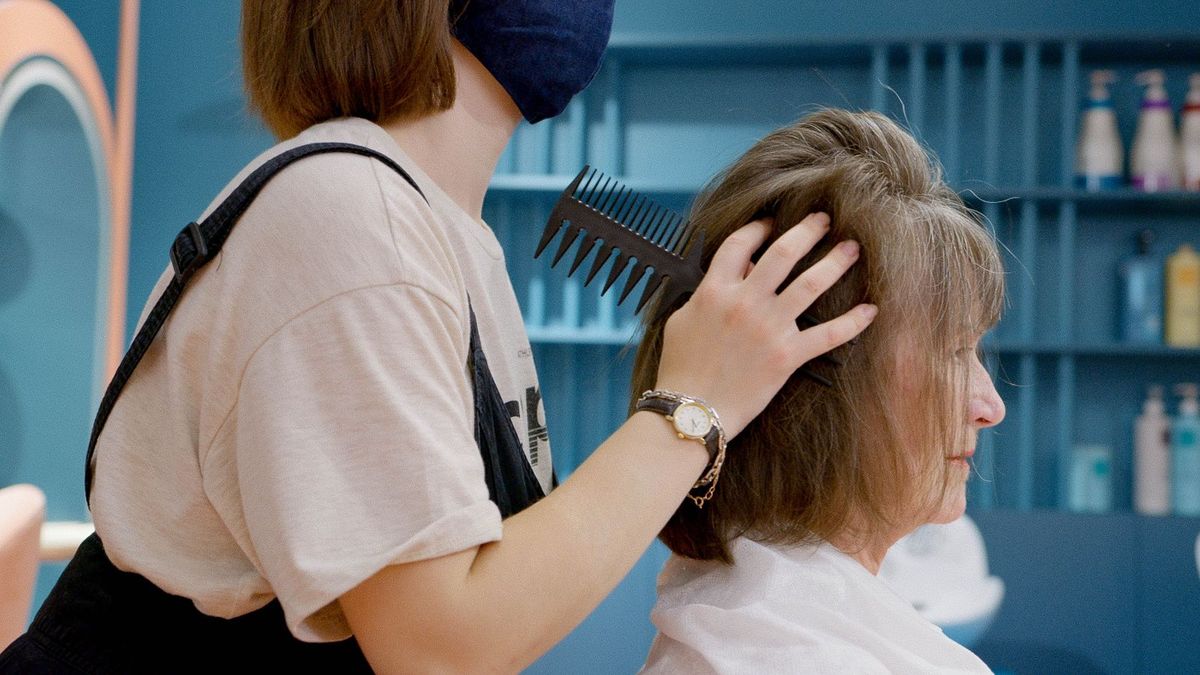
- A hairstylist combing a client’s hair in a salon — Pexels by Artem Podrez, Pexels License (free to use).
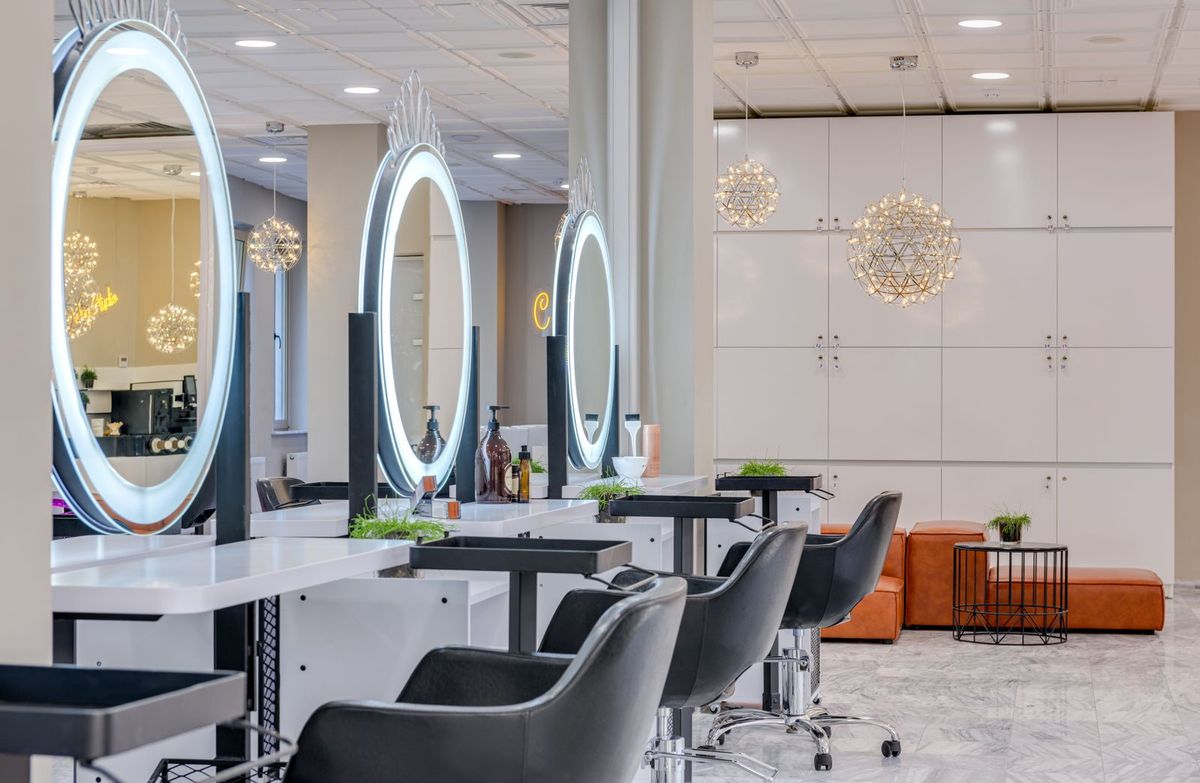
- Salon styling chairs in front of round illuminated mirrors in a bright salon interior — Pexels by Max Vakhtbovych, Pexels License (free to use).
- A woman having her hair washed at a salon sink — Pexels by RDNE Stock project, Pexels License (free to use).