
AI Tools for Delivery Businesses in India: Route Planning, Tracking and Dispatch
Published , Updated , 18 min read
If you run a delivery business in India — a cloud kitchen, a courier service, a pharmacy chain, a grocery store with its own riders, or a small fleet of tempos and bikes — your biggest daily cost is not the vehicle. It is the wasted kilometre: the rider who crosses the same neighbourhood three times, the driver stuck in traffic that a better route would have avoided, and the customer who calls you because nobody told them when their order would arrive. AI route planning and delivery management tools exist to fix exactly that. They take your list of stops, work out the best order, assign stops to drivers, track everyone live, and collect proof of delivery.
The direct answer is this: if you have one or two riders and under about 100 deliveries a month, start free with Routific or Shipday. If you have several drivers and hundreds of stops a week, OptimoRoute is the most practical paid step up, with a 30-day trial to test it first. Google Maps stays useful as a free navigation aid for very small routes, but it is not a delivery management tool. FarEye, Locus and Shipsy are powerful enterprise platforms built for large fleets and multi-city operations — they are not priced for a small business, and none of them publishes a small-business price list. Every tool in this article works in India without a VPN, because all of them are ordinary web and mobile apps. Prices and free limits change often, so re-check the official pricing page before you pay or promise a customer a delivery deadline based on a tool’s claims.

The short answer, in one table
| Job | Best starting point | Free limit or price to remember |
|---|---|---|
| Free route planning for a tiny fleet | Routific | Free up to 100 orders a month, per Routific’s own pricing change note |
| Dispatch plus tracking for a small business | Shipday | Free Starter plan: 300 orders a month, up to 10 drivers |
| Multi-driver route planning at scale | OptimoRoute | 30-day trial, limited to 250 stops; Lite from $35.10 per driver per month |
| Free navigation for very small routes | Google Maps | Free, but only 10 places per route and no automatic optimisation |
| Enterprise last-mile delivery | FarEye | Custom enterprise quote only; no public price |
| Enterprise dispatch and routing | Locus | Custom quote only; no public price |
| Enterprise logistics and last mile | Shipsy | Custom quote only; no public price |
What these tools actually do
Before comparing names, it helps to know the four jobs a delivery tool can do, because no single free tool does all four equally well. First, route optimisation: given 20, 50 or 200 stops, the software works out the shortest or fastest order, respecting time windows (for example, a customer who asked for delivery between 4 and 6 pm), vehicle capacity and driver shifts. Second, dispatch: assigning the right stops to the right driver instead of handing every rider the same long list. Third, live tracking and customer communication: showing where the rider is, sending the customer an estimated arrival time by SMS or WhatsApp, and updating that estimate when traffic changes. Fourth, proof of delivery: a photo, signature or one-time code that proves the parcel reached the right person, which matters enormously for cash-on-delivery disputes and for high-value goods.
A small business usually needs the first two jobs on day one and the last two within a few months. An enterprise needs all four, plus integrations with its warehouse, billing and customer service systems. That difference is why the tools below split so cleanly into free small-business tools and quote-only enterprise platforms. Buying an enterprise platform for ten riders is like hiring a full warehouse system to run a single shop: it will work, but you will pay for features you never open.
Routific: the best free start for route planning
Routific is a cloud-based delivery route planner built for small and medium businesses. You import your delivery addresses, set time windows, vehicle capacities and stop priorities, and it generates optimised routes in minutes. Dispatchers share routes with drivers through a mobile app, with real-time tracking and automated customer notifications.
The reason Routific leads this list is its free tier. According to Routific’s own blog post about route planning software, the company switched in mid-2024 from per-vehicle pricing to a per-order model with a free tier covering up to 100 orders a month, then $150 a month for 101 to 1,000 orders, with a falling per-order charge above that. Be careful here, because sources disagree: older comparison pages still list Routific at $49 per vehicle per month, which was the old model. The per-order model described on Routific’s own blog is the newer account, but since pricing pages change, confirm the current tier on Routific’s official pricing page before budgeting. For a business doing fewer than 100 deliveries a month — a home bakery, a single pharmacy, a tiffin service — the free tier is genuinely usable, not a seven-day demo.
Routific works best when: you have a fixed list of stops each morning, you want the computer to decide the order, and you do not yet need deep warehouse integration. It works less well when: you need complex multi-depot planning across cities, or you need advanced proof-of-delivery workflows with barcode scanning at every step. In that case, look at the enterprise tools below, or at Shipday for the customer-facing side.
Shipday: dispatch, tracking and customer updates in one place
Shipday is a delivery management platform that combines route optimisation with driver dispatch, live tracking and customer notifications. Its AI calculates multi-stop routes in seconds, assigns orders to the nearest available driver based on location, availability and vehicle capacity, and pushes the route to the driver’s app. Routes recalculate automatically when new orders arrive during the day, which matters for restaurants and pharmacies that take orders all day rather than in one morning batch.
Shipday states plainly on its India page that its route optimisation is available in India and in more than 50 countries, with a driver app supporting more than 30 languages. Its free Starter plan covers 300 orders per month with up to 10 drivers, and its Professional plan is listed at $49 a month including 300 orders, with $0.10 per extra order. That makes Shipday the most generous free tier on this list for a business with several riders: 300 orders and 10 drivers free is enough for a small restaurant chain or a local courier to run for real, not just to test. The paid step is also modest compared with enterprise platforms.
Shipday works best when: customers keep asking “where is my order”, you take orders through the day, and you want branded tracking links with your own logo and colours. The branded tracking experience is on the higher $99-a-month Branded Elite plan, so do not expect your logo on every tracking page on the free plan. Shipday works less well when: you need heavy warehouse or multi-modal freight management, which is Shipsy and FarEye territory.
OptimoRoute: the practical paid step up for multi-driver fleets
OptimoRoute is a routing platform with unusually detailed control: individual driver profiles with shift schedules, breaks and overtime rules, start and end locations, service areas, vehicle types, and multiple capacity constraints such as weight and volume. If your business has drivers with different vehicles — bikes for documents, tempos for bulk goods — or drivers who must stay inside certain zones, OptimoRoute lets you encode those rules instead of fixing the plan by hand afterwards.
The pricing is per driver, not per order: Lite is $35.10 per driver per month for up to 700 orders at once, and Pro is $44.10 per driver per month for up to 1,000 orders, adding analytics, weekly planning, real-time order tracking and proof of delivery. The free trial runs 30 days but is limited to 250 stops, which is an honest limitation to know in advance: you can test the interface and the planning logic, but you cannot easily judge how it performs on a 1,000-stop day until you pay. OptimoRoute does not include barcode scanning or order-taking, so if those are core to your operation, pair it with another tool rather than expecting one app to do everything.
OptimoRoute works best when: you have a stable team of drivers, you plan routes daily or weekly, and you want live tracking, live ETAs and proof of delivery in one system. It works less well when: your driver count changes every week, because per-driver pricing means you pay for capacity in quiet weeks too, or when your volume is so small that Routific’s free tier already covers you.
Google Maps: free, familiar, and not a delivery tool
Google Maps deserves an honest place in this article because almost every Indian delivery rider already has it on their phone, and for a very small route it is enough. You can add destinations, drag them into order, and get turn-by-turn navigation with live traffic. It costs nothing and every rider already knows how to use it.
Its limits are just as clear. A single Google Maps route holds only 10 places in total — your start plus nine stops — and it does not reorder them for you. It routes through stops in exactly the order you typed them. With three or four nearby drops, that is fine. With fifteen stops, working out the best order by hand is slow and almost always wrong, and the extra kilometres cost real fuel money every day. Google Maps also has no dispatch, no proof of delivery, no customer ETA messages and no record of who delivered what. The honest threshold used by route-planning guides is this: under about eight stops, one driver, no delivery features needed — Google Maps is fine. Past that, you are fighting the tool. Use it as the navigation layer inside a proper route plan, not as the plan itself.
FarEye: enterprise last-mile delivery, with an AI dispatcher
FarEye is an enterprise delivery management platform spanning first mile to last mile, used by companies including Blue Dart, Tata Steel and Domino’s, according to its G2 profile. It ranked first for Last Mile Delivery in G2’s 2026 Best Software list, and in April 2026 it launched PILOT, an 11-agent AI dispatcher, alongside AI routing and carrier allocation. Its platform covers delivery experience and shipment visibility, with a very large carrier network — FarEye’s own comparison material cites more than 1,500 carrier integrations.
There is no public price, and no free tier. FarEye uses custom enterprise quotes shaped by deployment size, volume and modules. Reviewers on G2 put a typical rollout at around five months, which tells you this is a project, not a sign-up-and-go app. FarEye works best when: you run multi-city deliveries, you manage several carriers, and you need a control tower view of everything from warehouse dispatch to the customer’s doorstep. It works less well when: you are a small business that needs something running this week on a small budget. If a salesperson suggests FarEye for a ten-rider fleet, ask what the smallest deployment actually costs, and get the rollout time in writing.
Locus: AI-led dispatch for complex, multi-constraint operations
Locus is an enterprise dispatch and transport management platform whose signature strength is AI agents and autonomous re-optimisation: when traffic, a failed delivery or a new urgent order changes the day, the system re-plans routes rather than leaving the dispatcher to redo everything by hand. Its six core modules cover dispatch, flexible shipping, sorting, tracking, field operations and a control tower view. Locus has deep traction in India, Southeast Asia and the Middle East, which matters because Indian address and traffic conditions are not an afterthought for it in the way they can be for a platform built only for Western suburbs.
Like FarEye, Locus does not publish pricing. Quotes are custom, based on delivery volume, fleet size, user count, modules and integration scope. Third-party estimates exist — one pricing-intelligence site estimated $4,800 to $9,600 a year for a 10-vehicle licence — but those are explicitly not vendor-confirmed, so treat them as a rough signal, not a quote. Locus works best when: your operation has complex constraints (cold chain windows, vehicle-type limits, strict service-level agreements) and you need routes to adapt during the day. It works less well when: you need a simple, cheap planner for a handful of riders, or you want to compare prices without a sales call.
Shipsy: end-to-end logistics, from freight to last mile
Shipsy is an AI-native logistics orchestration platform that covers more than last-mile delivery: freight, cross-border movement, warehousing and last mile in one suite. It was recognised as a Niche Player in Gartner’s 2026 Magic Quadrant for Transportation Management Systems, for the third consecutive year, and it is rated 4.5 out of 5 on G2. Its breadth is its selling point: a business that moves goods between cities as well as within them can manage both legs in one system.
Shipsy also does not publish pricing. Across G2, Gartner Peer Insights, Capterra and similar platforms, no tiers or per-seat rates are listed; every quote is negotiated on shipment volume, modules, users, integration scope and geography. Buyers most often flag ERP and SAP integration complexity as a concern, so if you run an ERP, get integration milestones and responsibilities written into the contract before signing, not after. Shipsy works best when: you are a third-party logistics provider or a multi-client enterprise, or you need freight plus last mile in one platform. It works less well when: you only do local deliveries and will never use the freight modules — you would be paying for breadth you do not need.
Using these tools in India: what actually breaks
Tools built for Western addresses meet Indian reality quickly, so test for these five things during any trial, before you pay.
First, addresses. Many Indian delivery addresses have no clean house number: they use landmarks (“near Hanuman mandir, opposite SBI ATM”), building names and pin codes. A tool is only as good as its address handling, so during the trial, feed it 50 of your real, messy addresses — not clean test data — and see how many it places correctly. If riders keep calling customers for directions, the optimisation savings evaporate.
Second, traffic and two-wheelers. A route that is optimal for a car may be poor for a bike, and a route planned on morning traffic may fail by evening. Prefer tools that recalculate during the day (Shipday and Locus both emphasise this) and that let you set vehicle types (OptimoRoute does this well). Test a route at your actual peak hour, not at noon.
Third, cash on delivery and failed deliveries. A large share of Indian deliveries still involves cash, and failed deliveries — customer not home, wrong address, refused order — are common. Your tool should record the reason for every failed attempt, support a second attempt the next day, and give you proof of delivery (photo or signature) for disputes. If it only marks a delivery as “done” or “not done”, it will not survive Indian operations.
Fourth, customer communication in the customer’s language. SMS and WhatsApp updates with a live tracking link cut “where is my order” calls dramatically. Check whether the tool sends updates on WhatsApp, whether the tracking page works on a low-end Android phone on a slow connection, and whether messages can go out in Hindi or the local language, not only English.
Fifth, cost in rupees, not just dollars. Most route tools price in US dollars per driver or per order. At small volumes that is manageable, but at hundreds of orders a day the dollar price, payment charges and GST treatment add up. Convert every quote to a monthly rupee cost at your real volume before comparing, and ask whether the vendor bills an Indian entity. For related small-business tooling, see our guides to AI tools for small businesses in India and AI tools for restaurants in India, and for selling online alongside deliveries, AI tools for online sellers in India.
What to avoid
Do not buy an enterprise platform for a small fleet. If your volume fits Routific’s free tier or Shipday’s free plan, paying for FarEye, Locus or Shipsy buys you a five-month rollout and a sales process, not faster deliveries this week. Do not judge a tool on a demo with clean addresses; judge it on your own messy address list and your own peak-hour traffic. Do not ignore the free-trial limits: OptimoRoute’s 250-stop trial cap and Route4Me’s move away from public pricing and trials (reported in Routific’s September 2026 update) both mean you may not be able to test at full scale before paying — say so in your evaluation, and ask the vendor for a paid pilot on real data instead. Do not promise customers a delivery time that your tool only estimates; traffic, weather and failed first attempts all break ETAs, and a missed promised time costs more trust than a slightly later honest estimate. Do not let riders use personal phones and personal Google Maps links with no record of deliveries, because the day a cash dispute or a lost parcel arrives, you will have no proof. Finally, do not sign a yearly enterprise contract before checking exit terms: what happens to your data, your address history and your customer records if you leave.

Frequently asked questions
Which AI delivery tool is free in India? Routific is free up to 100 orders a month on its per-order model, and Shipday’s Starter plan is free for 300 orders a month with up to 10 drivers. Google Maps is free for navigation but does not optimise routes. All three work in India without a VPN.
Which tool is best for a small delivery business with 2 to 5 riders? Start with Shipday if you want dispatch plus customer tracking in one place, or Routific if you mainly need route order. Both have usable free tiers. Move to OptimoRoute when your stop count and driver rules outgrow them.
Can Google Maps optimise a delivery route automatically? No. Google Maps routes through stops in the order you enter them and caps a route at 10 places in total, including your start. It gives navigation and live traffic, but the optimisation — working out the best order — is work you must do yourself or hand to a tool like Routific or OptimoRoute.
Do FarEye, Locus and Shipsy publish their prices? No. All three use custom enterprise quotes based on volume, fleet size, modules and integrations. Do not budget from third-party estimates alone; get a written quote for your actual volume and ask for rollout time and integration responsibilities in the contract.
What is proof of delivery, and why does it matter in India? Proof of delivery is evidence that a parcel reached the right person — usually a photo, a signature or a delivery code. It matters because cash-on-delivery disputes, refused orders and “never received” claims are common, and without proof you absorb the loss.
How do I test a delivery tool before paying? Feed it 50 of your real addresses, plan routes at your real peak hour, send a rider out with the driver app, and check three things: whether the route order saved time, whether customers got useful tracking updates, and whether proof of delivery was captured cleanly. A demo on clean data proves nothing.
Do these tools work without a VPN in India? Yes. Routific, Shipday, OptimoRoute, Google Maps, FarEye, Locus and Shipsy are all ordinary web and mobile services available in India. You do not need a VPN for any of them, though enterprise platforms may still need a sales call and an implementation project before you can use them.
Will AI route planning work for bikes and two-wheelers? It works best when the tool lets you set vehicle types and recalculates during the day, because bike routes and car routes differ. Check vehicle settings during the trial and test at peak traffic; a tool that only plans for cars will give bike riders poor routes.
Final verdict
Start free with Routific or Shipday for a small fleet, add OptimoRoute as stops grow, and consider FarEye, Locus or Shipsy only at enterprise scale.
A note on honest limits: prices, free limits and trial caps in this article come from vendor pages and comparison sources checked in November 2026, and they change without notice. Routific’s own blog and older comparison pages already disagree about its pricing model, which is a live example of why you must re-check the official pricing and help pages before paying, signing a contract, or promising a customer a deadline. This article is general information about software options, not business or legal advice; for contracts, tax treatment of dollar-priced subscriptions, and service-level agreements, check with your accountant or adviser.
Image credits:
- A courier carrying a parcel out of a white delivery van loaded with boxes — Pexels by Pavel Danilyuk, Pexels License (free to use).
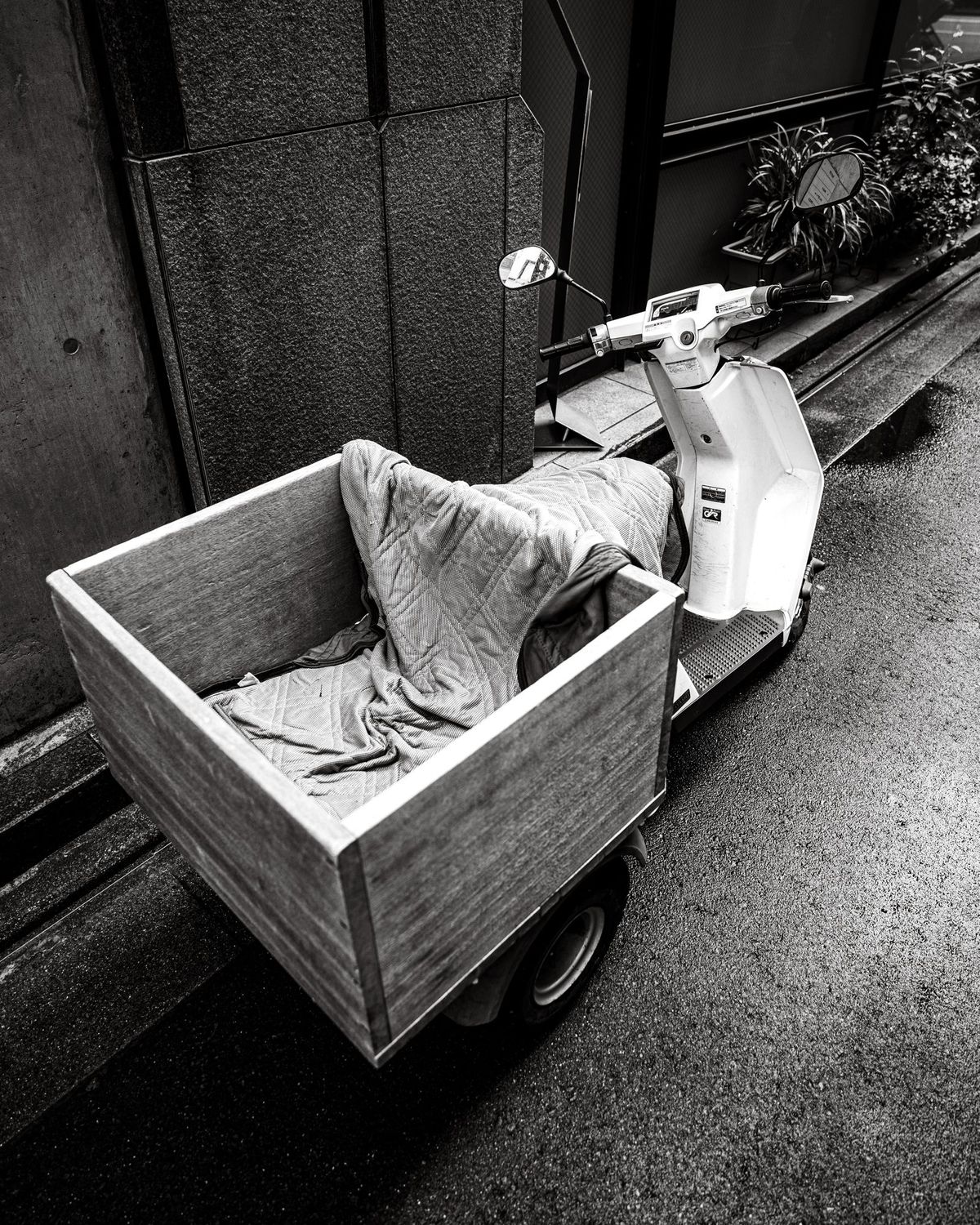
- A delivery scooter with a large cargo box parked on a street — Pexels by Paolo Sanchez, Pexels License (free to use).
- A courier pushing a trolley loaded with cardboard parcels beside a van — Pexels by Tima Miroshnichenko, Pexels License (free to use).