
Best AI Tools for Hotels in India: Bookings, Management and Reviews
Published , Updated , 22 min read
The direct answer
If you run a small hotel, guesthouse, homestay or bed-and-breakfast in India, the best AI setup is not ten separate apps. It is one system that holds your rooms, bookings and guest details, one messaging channel your guests already use, and then — only after those two work — AI help for pricing and review replies. Buy the booking and management foundation first, because an AI chatbot that cannot see live room availability will confidently promise a room you do not have, and an AI pricing tool fed by a messy calendar will recommend prices for the wrong dates.
For most properties with 5 to 30 rooms, the practical starting point is an all-in-one small-property system such as Little Hotelier or an India-rooted platform such as Stayflexi, paired with WhatsApp for guest messages. If you already list on Booking.com, MakeMyTrip, Goibibo and Agoda, a channel manager inside that same system matters more than any chatbot, because it stops double bookings when the same room sells on two sites at once. Guest messaging tools such as HiJiffy and review tools such as RepuSuit or ConnectBooker come next, and dynamic pricing tools such as Lighthouse or RoomPriceGenie come last, once your occupancy data is clean for at least a few weeks. Free tools — Google Business Profile, the WhatsApp Business app, and the free tiers of ChatGPT or Gemini for drafting — can carry a very small property a long way before you pay for anything specialised.
Prices and free limits in this article were checked against vendor pages and independent comparisons in late 2026, but they change often. Several sources disagree with each other on the same tool’s starting price, and this article says so wherever that happens. Always re-check the official pricing and help page before paying, and never promise a guest a deadline or a price based only on what an AI tool told you.
Short-answer table
| Job to be done | Best starting pick | Free or trial option | Watch out for |
|---|---|---|---|
| All-in-one bookings and management for 1–30 rooms | Little Hotelier | 30-day free trial | Price depends on room count; add-ons cost extra |
| India-rooted all-in-one system with AI agents | Stayflexi | Pricing configurator on its site; confirm trial with sales | AI agents are newer than the core PMS, so test them on your own property |
| Established India PMS with wide integrations | eZee Absolute (Yanolja Cloud Solution) | AI concierge reported free on Growth and Enterprise plans until December 2026 | Core pricing is quote-based, so get it in writing |
| Larger small hotel going international | Cloudbeds | Quote only; no published starting price found | Review AI is an add-on, not in the base system |
| Guest chatbot and messaging in many languages | HiJiffy | Demo on request; pricing reported from around €350 a month | Template-driven answers can struggle with unusual questions |
| AI room pricing for independents | Lighthouse | Plans reported from €99 a month | Needs clean PMS data to give useful prices |
| Simpler AI pricing for B&Bs and small inns | RoomPriceGenie | Plans reported from €198 a month | Primarily a pricing tool, not a full PMS |
| Reviews across Google, MakeMyTrip and Goibibo | RepuSuit or ConnectBooker | RepuSuit lists a 15-day free trial | Some OTA review syncing is manual or assisted, not automatic |
| Free guest messaging for a tiny property | WhatsApp Business app | Free app | No automation at scale; the paid API charges per message |
| Free drafting, translations and social posts | ChatGPT or Gemini free tiers, Canva free tier | Free tiers exist | Free limits change; never paste guest personal data into a public chatbot |
1. Little Hotelier: the all-in-one starter for small properties
Little Hotelier, from SiteMinder, describes itself as all-in-one software for properties with 1 to 30 rooms, covering guesthouses, bed-and-breakfasts, inns, motels and small hotels. It is cloud-based, so there is nothing to install, and it bundles the four things a small property actually needs every day: a single calendar for reservations, a channel manager that keeps Booking.com, Agoda, Expedia and other channels in sync, a direct booking engine for your own website, and a mobile app for running the property away from the desk.
The pricing picture is exactly where sources disagree, so treat any single number with caution. Little Hotelier’s own pricing page offers a 30-day free trial and says pricing depends on the number of rooms, with a Basics plan and a Pro plan, plus add-ons such as payments, hotel metasearch, a website builder and a Dynamic Revenue Plus pricing add-on. One independent comparison published in 2026 quoted Little Hotelier from 179 US dollars a month, while another reported a Basics plan from 39 US dollars a month plus a 1 percent booking fee. Those two figures cannot both be the same plan at the same time, which is why you should enter your own room count on the official pricing page and get the quote in writing before budgeting. The trial is the honest test: connect your real channels, take two or three real bookings through it, and check that cancellations update everywhere before you pay.
Little Hotelier fits a property that wants one bill and one login, and whose owner does not want to stitch together five tools. It fits less well if you need deep AI: its own pages name no dedicated AI assistant, and its pricing intelligence lives in the Pro plan and add-ons rather than in the base product. Pair it with a messaging or review tool below rather than expecting it to answer guests for you.
2. Stayflexi: the India-rooted all-in-one with AI agents
Stayflexi is built for Indian independents and small groups, and it is the most interesting option in this list for a property that wants AI doing real tasks rather than only showing dashboards. It combines a property management system, a channel manager covering more than 100 online travel agencies, a booking engine, a revenue manager, point-of-sale billing, housekeeping, guest messaging, payments and reputation management on one data model. The vendor reports more than 5,000 hotels and 90,000 rooms across more than 10 countries, and says most properties go live in under two days with free onboarding, training and channel mapping. Those are vendor claims, not independently audited figures, but the scale claim at least tells you this is not a two-person side project.
On top of the core system sits FlexiAI, a set of AI agents. Guest Assist replies to guests across Airbnb, Booking.com, WhatsApp and other channels. Reputation Manager drafts and posts review replies with sentiment tracking. Night Auditor runs automated nightly audits including point-of-sale reconciliation. Revenue, operations and analytics agents were described as in development at the time of writing. The important difference from a generic chatbot is that these agents work from the same guest, folio, inventory and channel data, so a reply about a bill or a booking can be checked against the real record instead of guessed.
Stayflexi publishes a live pricing configurator with an India region, which is genuinely useful: you can price your exact room count and package before talking to sales. Check whether the AI agents are included in the package you price, or sold separately, and run the same trial test as with any system: a real booking, a real cancellation, a real refund question, and a review reply you approve before it goes live.
3. eZee Absolute: the established Indian system
eZee Absolute, now sold under Yanolja Cloud Solution after South Korea’s Yanolja acquired eZee Technosys in 2019, is one of the best-known hotel software brands to come out of India — it started in Surat in 2005. The suite covers front-desk operations, reservations, housekeeping, billing, a channel manager, a booking engine, payments and region-specific tax and compliance reports. Yanolja Cloud Solution describes itself as serving tens of thousands of hotels across more than 170 countries with hundreds of integrations and more than 50 languages.
Its newer plan structure bundles the property management system, channel manager, booking engine and payments in an Essential tier, with AI guest communication, dynamic pricing and reputation management in a Growth tier. One comparison reported that the AI concierge is free for Growth and Enterprise properties until December 2026, with pricing after that still to be confirmed. That date matters: if you choose eZee partly for the AI concierge, ask sales in writing what it will cost from January 2027, so the free period does not turn into a surprise bill. Third-party India pricing lists have quoted indicative figures starting around 2,250 rupees a month for a Classic configuration, rising with higher tiers, before taxes — but these are indicative calculations from resellers, not a vendor price list, so get your own quote.
Choose eZee if you want a mature Indian system with deep local compliance and tax reporting, and if you run more than one property or plan to grow into a small chain. A single five-room guesthouse may find it heavier than Little Hotelier or Stayflexi, and should compare onboarding time, not just features.
4. Cloudbeds: the international option with AI review help
Cloudbeds is a global hospitality platform used by properties that also want international distribution, and it appears in almost every India PMS comparison as the international alternative to the Indian systems above. Its core is a property management system with reservations, payments and revenue intelligence, and its Guest Experience layer consolidates messages from SMS, email, WhatsApp, Booking.com, Airbnb, Expedia, Vrbo and Instagram into one inbox inside the system, because it runs on the same data as reservations and folios.
The AI angle is Cloudbeds Signals, its AI model, which powers AI-assisted review insights and automated review responses as an add-on, plus an AI assistant inside the guest experience tools. Cloudbeds does not publish a starting price — every comparison found says quote only — so you cannot budget for it from the website alone. That is a real cost in time: expect a sales call and a custom quote based on rooms and features.
Cloudbeds fits a property with international guests, multiple channels and staff who will actually use a unified inbox. It is probably too much, and too opaque on price, for a small family-run guesthouse that mainly takes bookings from MakeMyTrip, Goibibo and walk-ins. If a vendor will not publish a price, make them earn the sales call by answering three questions first: total monthly cost for your room count, which AI features are included versus add-ons, and how long onboarding takes.
5. HiJiffy: the multilingual guest chatbot
HiJiffy is a conversational AI platform built specifically for hotels. It acts as a booking assistant and virtual concierge, answering guest questions, taking reservations and handling service requests around the clock, across a website, WhatsApp, social media and online travel agency inboxes. It is listed in the Cloudbeds marketplace and integrates with SiteMinder’s booking engine, so it can offer real room availability and prices and turn a chat into a confirmed direct booking rather than a vague enquiry.
Its headline strength is language coverage: HiJiffy says its AI answers in more than 130 languages, is trained on more than 200 hospitality topics, and improves with every conversation, with generative AI in the mix. For a hotel in Goa, Jaipur or Rishikesh that hosts guests from a dozen countries, that matters more than any single feature. The weaknesses reported by independent comparisons are equally specific: the chatbot can feel template-driven and struggle with unexpected questions, and pricing is reported from around 350 euros a month for a full premium package, which is a serious cost for a small property. Confirm the price and the language list on the official site, and test it with the awkward questions your guests actually ask — “Can I check in at 4 am after a delayed flight?” and “Is your rooftop restaurant Jain-friendly?” — not just “What time is check-in?”
HiJiffy makes sense once direct bookings and international guests are a large share of your business. For a property whose guests mostly message in Hindi or English on WhatsApp, the free WhatsApp Business app plus saved replies may do the same job for nothing until volume grows.

6. SiteMinder: distribution first, chatbot second
SiteMinder is best known as a channel manager and booking engine, and it is worth listing separately because many small hotels already use it without realising it is the platform behind their channel sync. Its own chatbot guide recommends tools such as HiJiffy, Easyway and Bookboost, all of which integrate with SiteMinder so the chatbot can pull real availability, pricing and promotions. SiteMinder’s own messaging product adds automated pre-stay and post-stay emails, online check-in, upsell prompts and TripAdvisor review integration, with a 14-day trial reported for new users followed by custom pricing.
The lesson here is architectural: the channel manager is the source of truth for availability, and the chatbot is only as good as its connection to it. If you already run SiteMinder, adding a chatbot that integrates with it is far safer than buying a standalone chatbot that cannot see your calendar. If you do not run SiteMinder, do not buy it just for the chatbot — buy the system whose channel manager and booking engine fit your OTA mix, then add messaging on top.
7. Lighthouse and RoomPriceGenie: AI pricing, done properly
Pricing is where AI earns its keep for a small hotel, and also where it does the most damage when set up badly. Both Lighthouse and RoomPriceGenie are revenue management tools: they watch demand signals, competitor prices, booking pace, seasonality and your own history, then recommend or automatically push new room rates to your channel manager or property management system several times a day.
Lighthouse is the fuller platform. It combines pricing optimisation with channel management, direct bookings and payments, and adds an AI phone assistant called KITT that handles guest calls and queries. One comparison published in 2026 put Lighthouse pricing from 99 euros a month for a Starter plan, with Plus at 129 euros and Complete at 189 euros, and reported an average revenue-per-available-room uplift of 21 percent for its users. RoomPriceGenie is the more focused tool: a standalone revenue management system for small independents, bed-and-breakfasts and vacation rentals, with plans reported from 198 euros a month for Core, 297 euros for Premium and 440 euros for Professional, and a reported average uplift of 19 percent. Both uplift figures are vendor-associated averages from a comparison article, not guarantees for your property — a hotel in a seasonal hill town and a hotel near an airport will not see the same result.
Start with Lighthouse if you also want channel management and direct bookings in the same platform, and with RoomPriceGenie if you already have a property management system you like and only need pricing. In both cases, run the tool in recommendation-only mode for at least two to four weeks before letting it push prices automatically, and set a floor price below which it may never sell a room. An AI that has never seen your monsoon season will happily discount your peak Diwali weekend if you let it.
8. Review tools: RepuSuit and ConnectBooker
Reviews decide bookings in India as much as price does. A guest choosing between two similar hotels in Udaipur will pick the one with recent, thoughtful replies to bad reviews over the one with a slightly higher rating and silence. RepuSuit and ConnectBooker are both India-aware tools that pull reviews from Google, TripAdvisor, Booking.com, Agoda, Expedia, MakeMyTrip and Goibibo into one dashboard, so you stop checking six apps every morning.
RepuSuit adds AI replies tuned to your hotel’s voice — it says the engine learns from your last 100 approved replies — plus a recovery flow that intercepts unhappy guests privately before they post, and competitor benchmarking. It lists a 15-day free trial and a 30-day money-back guarantee. ConnectBooker offers a similar unified dashboard with AI-powered review replies, real-time negative review alerts by email and WhatsApp, Google Business Profile monitoring and a reputation score. The honest caveat for both is that syncing is not always fully automatic: RepuSuit’s own pages describe native Google sync and TripAdvisor extraction, with manual or assisted sync for some booking sites. Ask which of your review sources sync automatically and which need a manual step, because a tool that misses your MakeMyTrip reviews is missing the reviews your Indian guests actually read.
The free alternative is unglamorous but effective: a daily 15-minute routine on Google Business Profile, replying to every review yourself, in your own voice. AI replies save time, but a reply that sounds like a robot costs more in trust than it saves in minutes. Whatever tool you use, approve every AI draft before it posts for at least the first month.
9. The free layer: WhatsApp, Google and general AI
Before spending anything, a small property should set up three free things properly. First, Google Business Profile: it is free, it controls how you appear on Google Search and Maps, and it is where most Indian guests check ratings, photos, timings and phone numbers before booking. Keep photos current, answer questions in the Questions section, and reply to reviews there first, because that is the profile every other tool reads from. Second, the WhatsApp Business app: it is free, it gives you a business profile, catalogue, automated greeting and away messages, and quick replies for check-in time, directions, tariffs and cancellation policy. It is not the same as the WhatsApp Business API, which is the paid route used by HiJiffy and similar platforms and which charges per message — Meta’s India message rates change periodically, so check the current rate card before committing to API messaging. Third, the free tiers of ChatGPT, Gemini and Canva: use them to draft social media posts, translate a welcome note into Tamil or German, write a polite reply to a difficult review, or design a festival offer poster. Free tiers have usage limits that change without much notice, and you should never paste a guest’s phone number, ID details or payment information into a public chatbot.
These free tools are also the right fallback. If a paid tool goes down during a long weekend, your Google profile and WhatsApp still work. If a paid AI writes something wrong, your own saved replies are the correction.
Using AI tools in India: the practical section
India changes the answer in five specific ways. First, the booking mix: Indian guests book through MakeMyTrip and Goibibo alongside Booking.com and Agoda, plus direct WhatsApp enquiries and walk-ins. Any system you buy must sync with the channels your guests actually use, or you will keep a parallel paper register and the AI will work from incomplete data. Second, language: guests message in Hindi, Hinglish, Tamil, Bengali, Marathi and English, often in the same thread. Test every chatbot and review tool with real Hinglish messages before paying, because a tool that only handles clean English will fail on the messages you actually receive. Third, payments: UPI is how many Indian guests prefer to pay, and GST invoicing is a legal requirement, not a nice-to-have. Confirm that your property management system handles UPI payments and GST bills natively, or that it connects to a payment tool that does, before you sign. Fourth, connectivity: a cloud system is only useful if your front desk has reliable internet and a phone fallback. Keep an offline list of today’s arrivals printed every morning, whatever your software promises. Fifth, staff: the best AI tool in this article fails if the person on night duty does not trust it. Train one staff member properly, give them the approval step for AI replies, and let the rest of the team see it working for a week before expanding access.
A sensible rollout for a 10-room guesthouse looks like this. Week one: Google Business Profile cleaned up, WhatsApp Business app with catalogue and quick replies, and one all-in-one system on trial with real channels connected. Week two to four: messaging or review AI added, with every draft approved by you before sending. Month two: pricing AI in recommendation-only mode, with a floor price set. Month three: automation switched on only for the tasks that proved accurate in months one and two. If any step fails, pause there — a hotel that answers WhatsApp fast and keeps its calendar accurate beats a hotel with five AI tools and double bookings.
Related reading on this site includes the guide to AI tools for small business, the guide to AI tools for travel planning, the guide to AI tools for restaurants for properties with a restaurant, and the guide to AI tools for customer support for messaging ideas that transfer directly to guest communication.
What to avoid
Avoid buying an AI chatbot before your calendar is accurate. A chatbot that confirms a room you do not have creates a complaint that no review reply can fix. Avoid any tool that demands a long contract before a trial, or that will not give you a total monthly price for your room count in writing — the hotel software market runs on quotes, and quotes drift. Avoid letting any AI post review replies, send payment links or change room rates without a human approval step, at least for the first month; the approval step is the whole safety system. Avoid pasting guest personal data — phone numbers, ID proofs, card details — into general AI chatbots, which are not built to store guest records securely. Avoid judging a pricing tool by its first week: pricing AI needs booking pace data across weekends, festivals and low seasons before its recommendations mean anything. Avoid the trap of collecting tools: five dashboards that nobody opens are worse than one system that the front desk actually uses every morning. And avoid believing any uplift claim — 19 percent, 21 percent or otherwise — as a promise for your property; those are averages across other hotels, in other markets, in other seasons.
A short honest-limits note on money: every price in this article is a snapshot, and hotel software pricing is especially prone to changing by room count, region, add-ons and exchange rates. Euro and dollar prices will also move in rupees. Re-check the official pricing page, confirm taxes and booking fees, and ask what happens to your data if you cancel, before paying for any annual plan.

FAQ
Which AI tool is best for a small hotel in India?
For most small properties, an all-in-one system such as Little Hotelier or Stayflexi is the best first buy, because it fixes bookings and the calendar before anything else. Add a messaging tool such as HiJiffy and a review tool such as RepuSuit only after bookings flow cleanly, and add AI pricing last.
Do small hotels in India really need AI, or is a simple booking system enough?
A simple booking system plus WhatsApp is enough for a property with a handful of rooms and mostly repeat or walk-in guests. AI earns its cost when enquiry volume, review volume or pricing decisions exceed what one or two people can handle by hand — typically above 10 rooms, or with heavy online travel agency traffic.
Can AI answer guests on WhatsApp automatically?
Yes, through tools such as HiJiffy or the WhatsApp Business API, but the free WhatsApp Business app itself only offers greetings, away messages and quick replies, not full AI answers. Automatic answers should be approved by a human for the first month, and the tool must be connected to live availability before it confirms anything.
How much does hotel AI software cost in India?
It ranges from free for Google Business Profile and the WhatsApp Business app, through roughly 99 euros a month reported for Lighthouse Starter and 198 euros a month reported for RoomPriceGenie Core, to custom quotes for Cloudbeds and eZee. Indian systems such as Stayflexi and eZee price by room count and package, so get a written quote for your property rather than budgeting from another hotel’s price.
Will AI pricing tools work for seasonal Indian destinations?
They can, but only after they have seen your seasons. A pricing tool needs data across peak season, monsoon and festivals before its recommendations are trustworthy, so run it in recommendation-only mode for several weeks, set a floor price, and never let it discount a known peak weekend without your approval.
Is it safe to let AI reply to negative reviews?
It is safe if you approve every draft before posting, and risky if you do not. AI drafts save time and keep tone polite, but a generic apology on a specific complaint — a cold shower, a billing error — reads as indifference. Use AI for the first draft, add the specific fix you actually offered, and then post it yourself.
What about guest data and privacy with AI tools?
Only use tools that store guest data in your property system or a named, access-controlled platform, and never paste guest phone numbers, ID details or payment information into a general public chatbot. Ask any vendor where data is stored, who can access it, and how it is deleted when you cancel, before connecting it to real guest records.
Do these tools work without a VPN in India?
Yes — the tools in this article are ordinary commercial web services sold to Indian hotels, and they are used without a VPN. If any tool ever asks you to use a VPN to access it, treat that as a warning sign and check with the vendor, because legitimate hotel software does not require one.
Final verdict
Start with one all-in-one system plus WhatsApp; add AI pricing and review replies only once bookings flow cleanly.
Image credits:
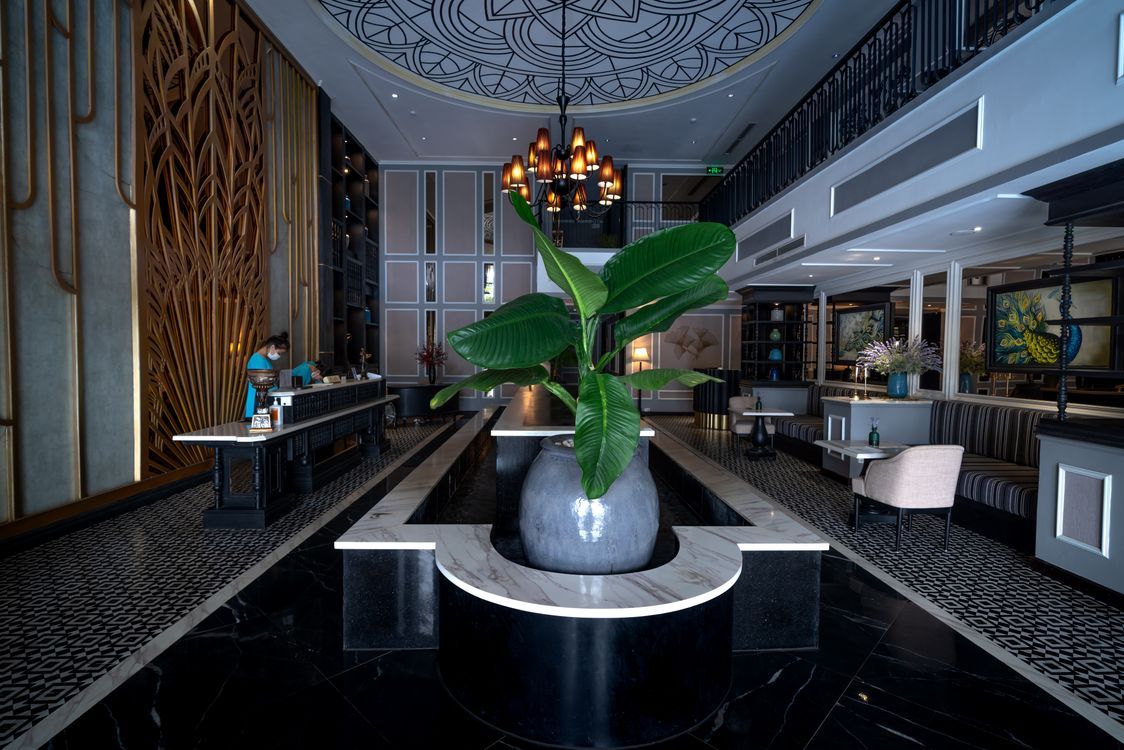
- A spacious hotel lobby with a central plant display, chandelier, and reception desk — Pexels by Quang Nguyen Vinh, Pexels License (free to use).
- A modern hotel room with a neatly made bed, bedside lamp, and warm lighting — Pexels by Amelia Hallsworth, Pexels License (free to use).
- A receptionist standing at a hotel reception desk with a service bell — Pexels by Andrea Piacquadio, Pexels License (free to use).